
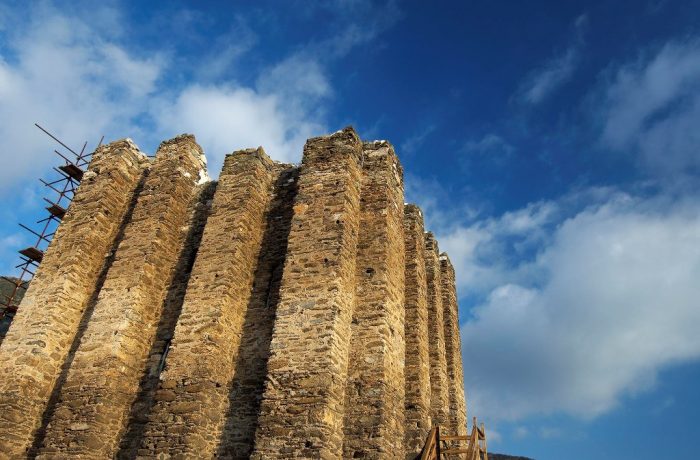
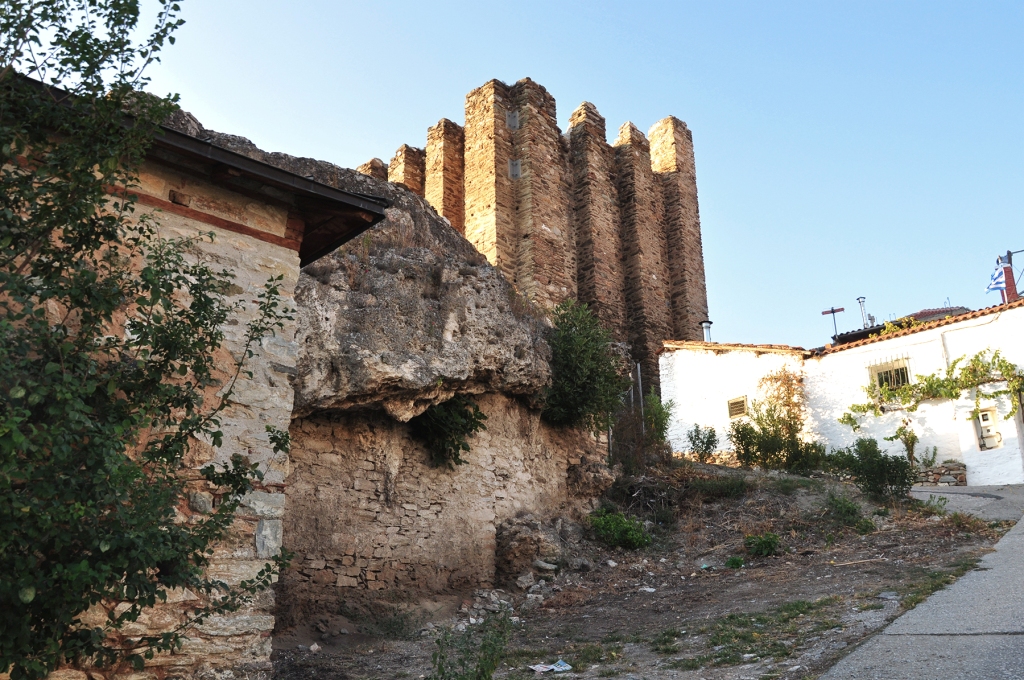
he Byzantine Tower of Galatista stands prominently in the center of the historic mountainous settlement of Galatista, approximately 40 kilometers east of Thessaloniki. As one of the most structurally sound and well-preserved medieval fortifications in Halkidiki, it serves as a major architectural and cultural landmark for the region.
Following a meticulous multi-year restoration project completed by the Archaeological Service, the tower functions today as an active cultural venue, bridging its heavy medieval history with contemporary cultural expression.
Architectural Profile and Historical Layers
Archaeological excavations indicate that the tower was constructed in two distinct phases, reflecting changing defensive priorities in Macedonia:
-
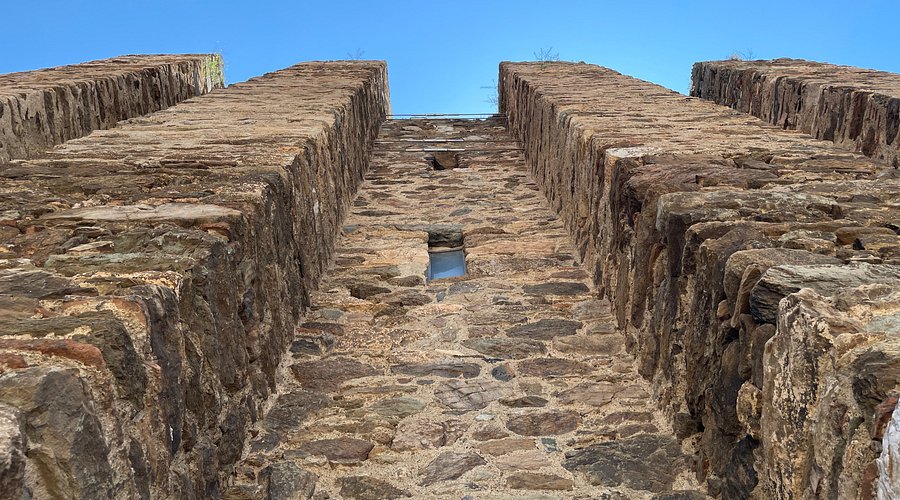
Lower Section (11th Century): Characterized by exceptionally thick walls (1.5 meters) built of rough stones and reinforced with heavy external buttresses. This blind lower level includes a built-in water cistern lined with hydraulic mortar to secure water during sieges.
-
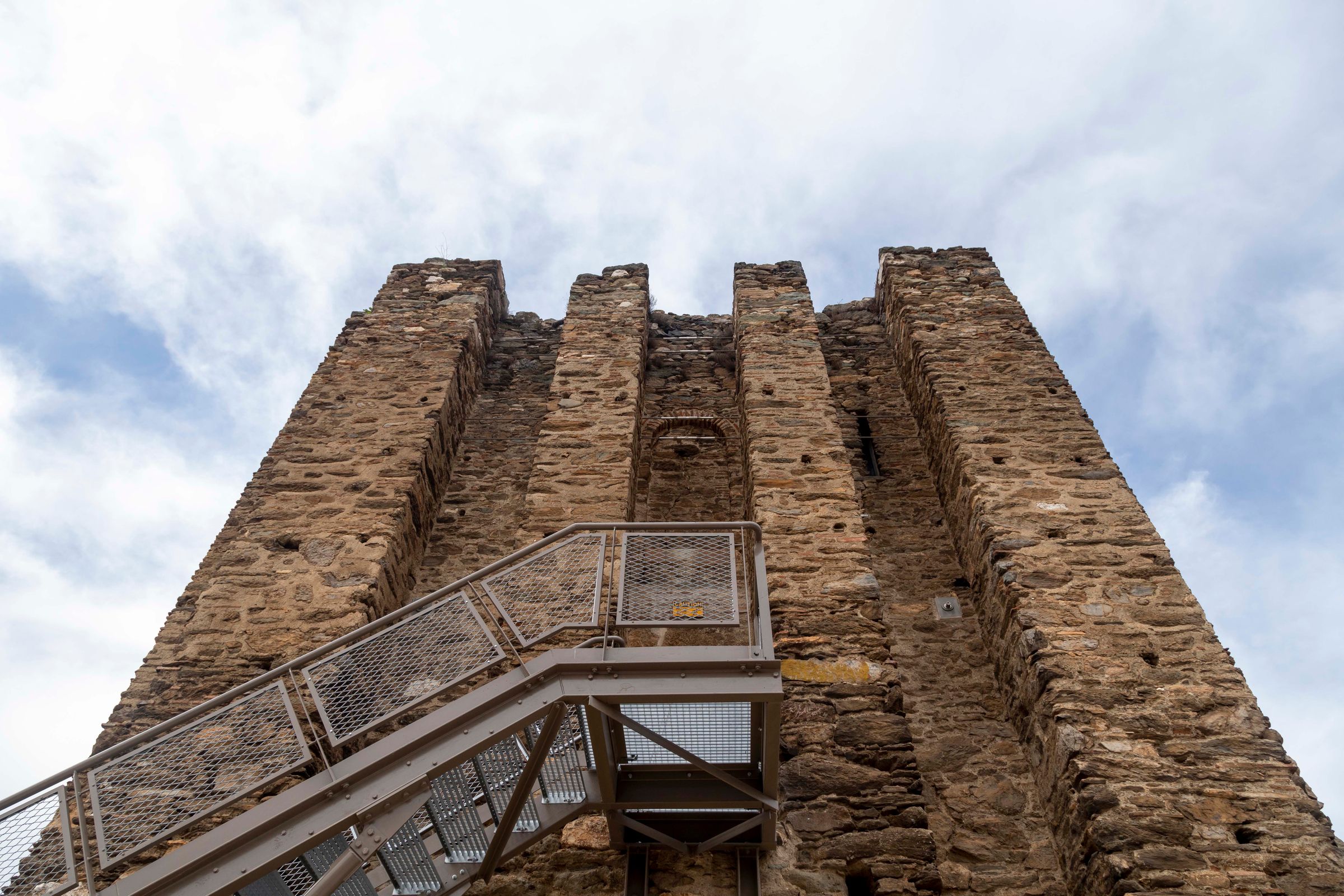
Upper Section (14th Century): Added during the late Byzantine era, extending the structure to its current height of 16 meters.
The interior spans three timber-floored levels above the basement, connected by a reconstructed wooden staircase. Defensive and domestic structural details remain visible, including narrow window slits, latrine shafts, a small kitchen area, and the remnants of a structural alcove on the top floor that likely served as a private chapel.
A Living Cultural Venue: Permanent and Periodical Exhibitions
Rather than remaining a static monument, the Tower of Galatista has been transformed into a vibrant cultural hub managed in collaboration with the Ephorate of Antiquities of Chalcidice and Mount Athos.
Permanent Historical Installation
Since 2014, the tower has housed the permanent educational exhibition “The Towers of Chalcidice” (also presented under the theme “War and Peace in the Byzantine Towers”). The display spans multiple floors and uses historical artifacts discovered during excavations—such as everyday pottery, Byzantine coins, arrowheads, and personal items like a bronze ring—to illustrate:
-
The role of defensive towers as agricultural and administrative centers in the medieval Macedonian countryside.
-
The strategic network of fortifications guarding the routes toward Mount Athos.
-
The daily routines, defense tactics, and economic activities of the people who lived within and around these stone strongholds.
Contemporary Art & Periodical Exhibitions
The interior spaces regularly host temporary contemporary art exhibitions, installations, and academic partnerships that contrast modern visual arts with the medieval stone architecture. Recent initiatives include the multi-medium exhibition “The Myth of Galateia” in collaboration with the School of Fine Arts of the Aristotle University of Thessaloniki, featuring modern sculptures, photography, and video installations integrated directly into the historic levels of the tower.
Visiting information
Opening days & hours
Daily [CLOSED TUESDAY]
08:30-15:30
FREE ANTRANCE