
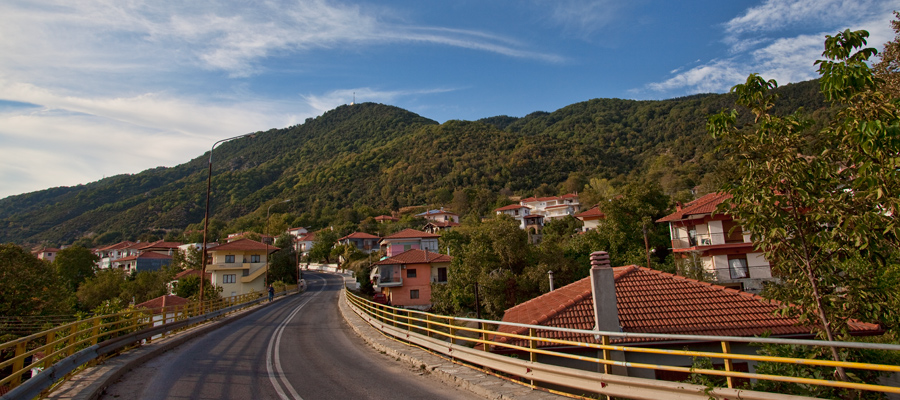
A High-Altitude Window to the Aegean
Stratoniki crowns the northern highlands of the Aristotle Municipality with dramatic architectural flair. This beautiful mountain village stands as one of the oldest and most elevated traditional settlements in the region. Because dense forests of beech and chestnut trees hug the entire mountain ridge, the village enjoys a remarkably crisp alpine climate that keeps summer afternoons delightfully cool.
Furthermore, its unique geographical positioning creates a spectacular natural terrace. Walking through the upper edges of the village rewards you with staggering, unobstructed panoramic views that sweep effortlessly across the Strymonikos Gulf, the Akanthios Gulf, and all the way to the blue outlines of Thassos Island on clear days.
The Golden Legacy of the Mademochoria
Stratoniki preserves a long, proud industrial history rooted deeply in the earth beneath its streets.
-
The Mining Capital: The village historically served as a central hub for the Mademochoria, a powerful league of 12 self-governed mining villages during the Byzantine and Ottoman eras.
-
Sultanate Privileges: Because the local miners extracted vast amounts of rich silver and lead ore for the royal mints, the Ottoman Sultan granted the town extraordinary tax exemptions and independent administrative freedom.
-
The Living Continuity: Unlike abandoned historical sites, the area directly maintains its underground legacy, seamlessly connecting centuries of traditional metalworking with modern regional infrastructure.
Historic Architecture: The Heart of Saint Nicholas
The local community carefully maintains its classic Macedonian mountain identity through its timeless public spaces and structures.
-
The Village Church: Built in 1813, the Church of Saint Nicholas stands as an architectural marvel in the town center. It successfully survived major historical conflicts and features incredible, hand-carved interior details.
-
Traditional Stone Masonry: As you stroll the quiet back lanes, you will actively discover majestic, two-story stone mansions showcasing overhanging wooden balconies and heavy slate roofs constructed by master craftsmen in the 19th century.
-
The Shared Square: The central paved square functions as the social heart of the town, where massive plane trees shade cozy neighborhood benches.
Elevated Ecotourism and Hiking
Thanks to its strategic position on the spine of the mountain, Stratoniki serves as an exceptional base camp for outdoor enthusiasts.
-
The Ridge Trails: Well-marked hiking and mountain biking trails cut directly from the village edge into the dense woodland canopy. These trails connect Stratoniki with its neighboring twin village, Stageira.
-
Panoramic Walks: Gentle walking paths trace the outer cliffs of the village, allowing photographers to catch the perfect morning light striking the sea below while walking among wild wildflowers and mountain herbs.
Travel Tip for Explorers
High Vistas and Traditional Bites
Start your day at 10:30 by parking near the historic Church of Saint Nicholas to examine its beautifully preserved 1813 stone masonry. Next, follow the walking path to the northeastern edge of the village for an incredible photo opportunity overlooking two gulfs simultaneously.
Around 13:00, grab a table at a local tavern in the square. Be sure to try any dishes featuring local wild mushrooms or slow-roasted meats, paired with traditional local spirits. Before leaving, stop by a local house or cooperative shop to purchase authentic chestnut honey and mountain tea harvested directly from the slopes.
Seasonal Highlights
The Feast of Saint Nicholas (December 6th / Summer Commemorations): The village celebrates its patron saint with great pride. While the formal religious feast day occurs in winter, summer cultural events hosted by the local association feature lively folk dancing, live string music, and communal food platters in the central square.