
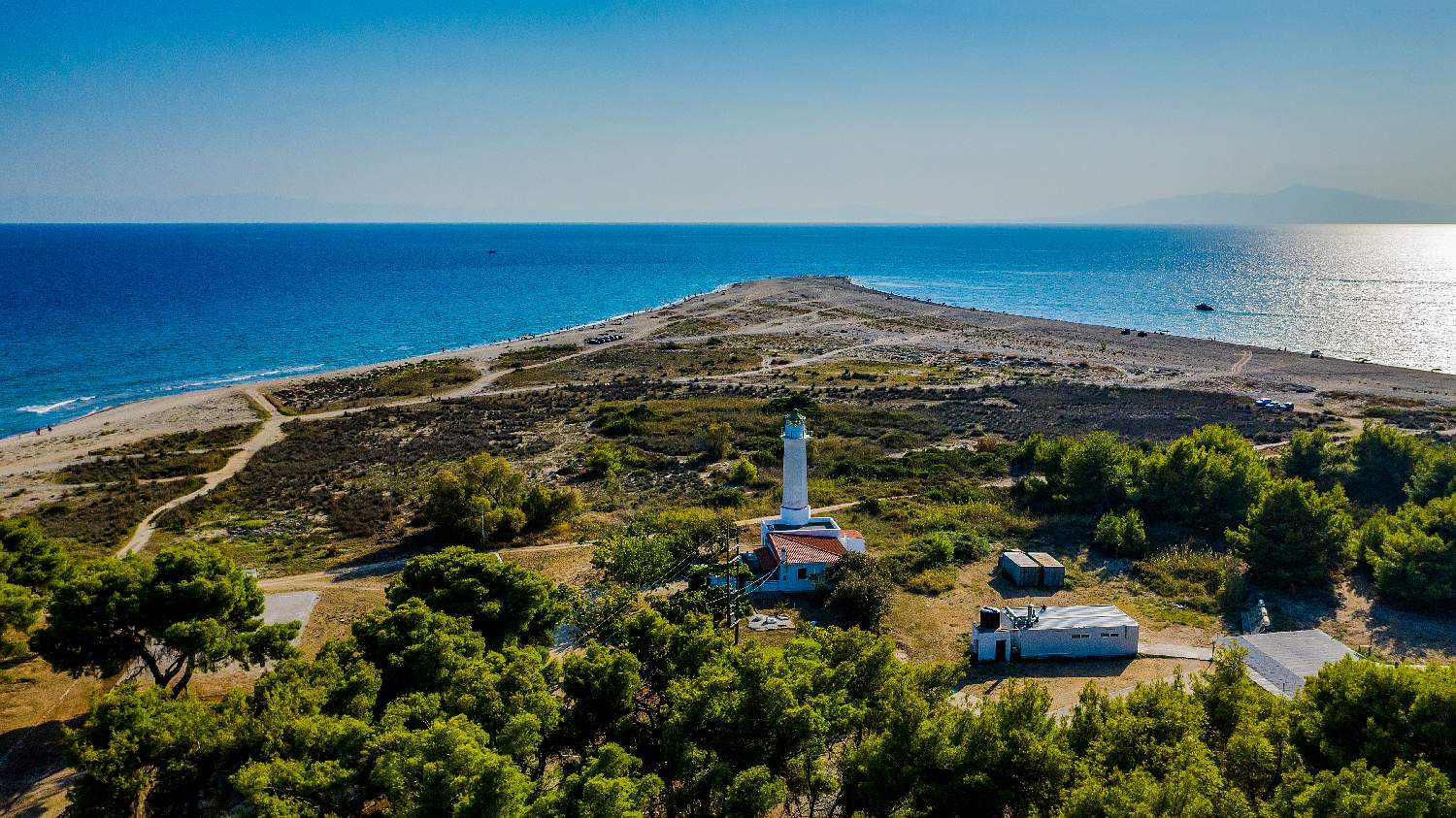
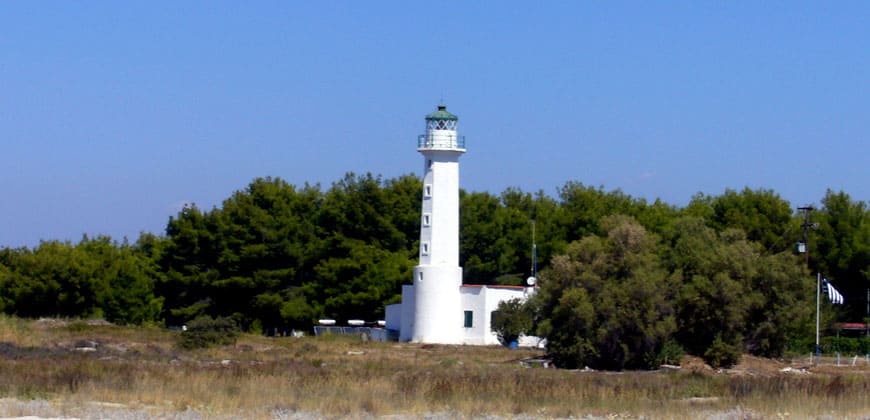
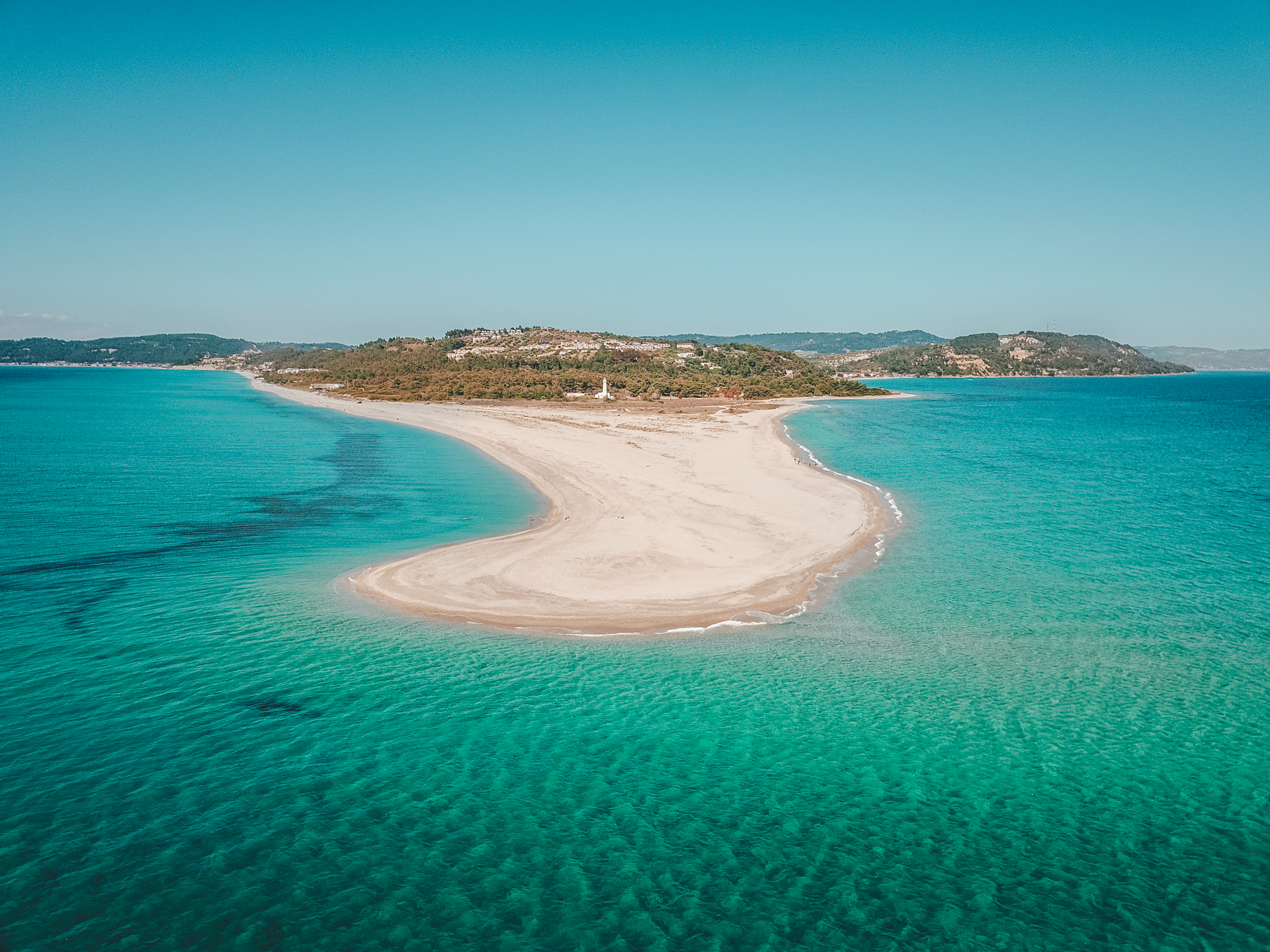
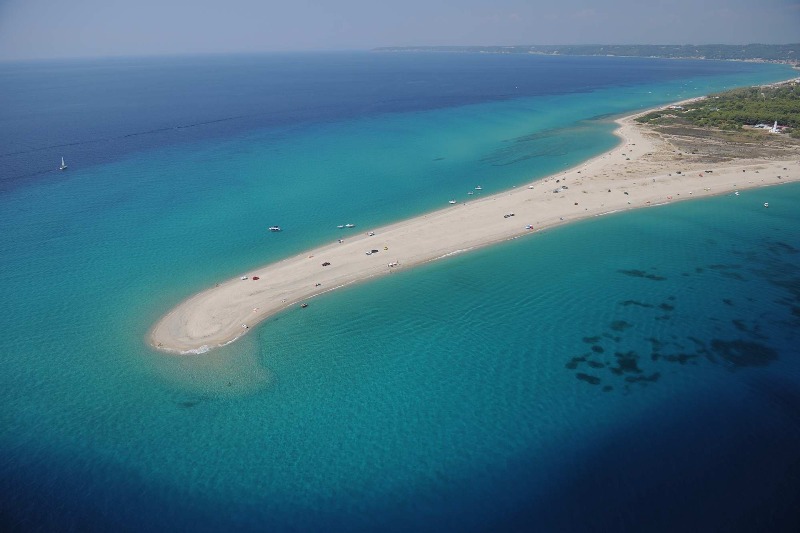
A stark, whitewashed sentinel rising directly from the shifting sands of Kassandra: the Lighthouse of Possidi stands as a beautiful testament to 19th-century maritime engineering. Built in 1864 by the French Lighthouse Company, this historic 14.5-meter stone tower dominates the dramatic, wind-swept headland of Cape Possidi. It is the only standing structure on this famous sandspit. Consequently, it serves as a iconic visual landmark where colonial architecture meets the untamed forces of the Aegean Sea.
1. The Shifting Sands of Cape Possidi
The most fascinating characteristic of the Lighthouse of Possidi is its changing relationship with the sea. When French engineers completed the stone structure in 1864, they anchored the foundations directly at the breaking point of the waves to maximize its visibility for passing ships.
However, Cape Possidi is an active, living geographical feature. Over the decades, changing marine currents, endless tides, and massive sediment accumulations completely reshaped the coastline. The sea gradually receded. Consequently, the lighthouse now sits slightly inland. It occupies a flat, sandy clearing surrounded by low beach vegetation and a lush backdrop of pine trees, though it still marks the definitive gateway to the peninsula’s wildest beach.
2. Colonial Architecture and Naval Integration
The structure represents a pristine example of industrial stone architecture from the late Ottoman period. The complex consists of the central octagonal tower joined directly to a traditional, low-slung keeper’s residence. This house originally featured a kitchen, a living hall, and three compact bedrooms to sustain the lighthouse keepers and their families during heavy winter storms.
The tower experienced several historical updates:
-
The Interwar Network: Following the Balkan Wars (1912–1913), the structure officially joined the Greek Lighthouse Network.
-
The Post-War Rebirth: Forces extinguished the light during the occupation of World War II. However, the Greek Navy restored operations in 1945.
-
Modern Automation: Technical teams replaced the old oil-burning machinery in 1975, ultimately converting the entire system to a fully automated electric flash by 1980.
3. Ancient Roots: The Realm of Poseidon
The lighthouse sits in an area saturated with classical history. This sandy headland is the ancient Posidonion, an Ionic expression recorded by the historian Thucydides in the 5th century BC. The entire cape belonged to the powerful ancient city-state of Mendi.
Just a short walk from the lighthouse walls lie the heavily excavated ruins of the Sanctuary of Poseidon. Ancient sailors stopped at this beachfront temple for centuries to offer sacrifices to the god of the sea before navigating the treacherous currents around the cape. Therefore, the modern lighthouse continues an ancient tradition of protecting mariners at this exact geographic junction.
Travel Tip for Explorers: You cannot enter the interior of the tower because it remains an active military naval site, but the exterior offers incredible photo opportunities. Time your visit perfectly for the late afternoon to witness one of the most majestic sights in the Mediterranean. As evening approaches, find a spot on the sand right next to the historic stone tower. From this exact edge of the peninsula, you can watch the sun sink directly behind Mount Olympus, the legendary home of the gods and the highest mountain in Greece. Bring plenty of water and no flip-flops; walking on the loose, deep sand of the cape can be exhausting under the summer sun.