
The Historical & Folklore Museum of Arnea: Inside Halkidiki’s 1750s Soul
Behind the carved wooden doors of a 1750s stone mansion, the mountain village of Arnea preserves traditional Macedonian life.
Tucked into the forested slopes of Mount Holomontas, Arnea (also spelled Arnaia) captivates visitors at first glance. Specifically, the village is famous for its cobblestone alleys, vibrant purple-and-ochre facades, and rich textile heritage. Right at the center of this living history sits the Historical and Folklore Museum of Arnea. Housed inside one of Halkidiki’s oldest surviving residences, this intimate museum offers a fascinating journey through time.
The Yiatradiko: A Masterpiece of Macedonian Architecture
Before you even inspect a single exhibit, the building itself demands your attention. Known locally as the Yiatradiko, this two-storey stone mansion was built between 1750 and 1755.
Furthermore, builders constructed it in the classic 18th-century Macedonian style. As a result, the mansion features a defensive stone tower and a dramatic projecting wooden balcony (sachnisi). Walking across its creaking timber floors, you immediately sense how mountain families lived and worked centuries ago.
Inside the Museum: A Floor-by-Floor Journey
Above all, what makes the Historical and Folklore Museum of Arnea truly special is its origin story. Almost every artifact on display was donated by the villagers themselves. Therefore, the museum never feels like a sterile institution. Instead, it feels like a cherished family heirloom passed down through generations.
1. The Ground Floor: Working the Land & Village Life (1880–1950)
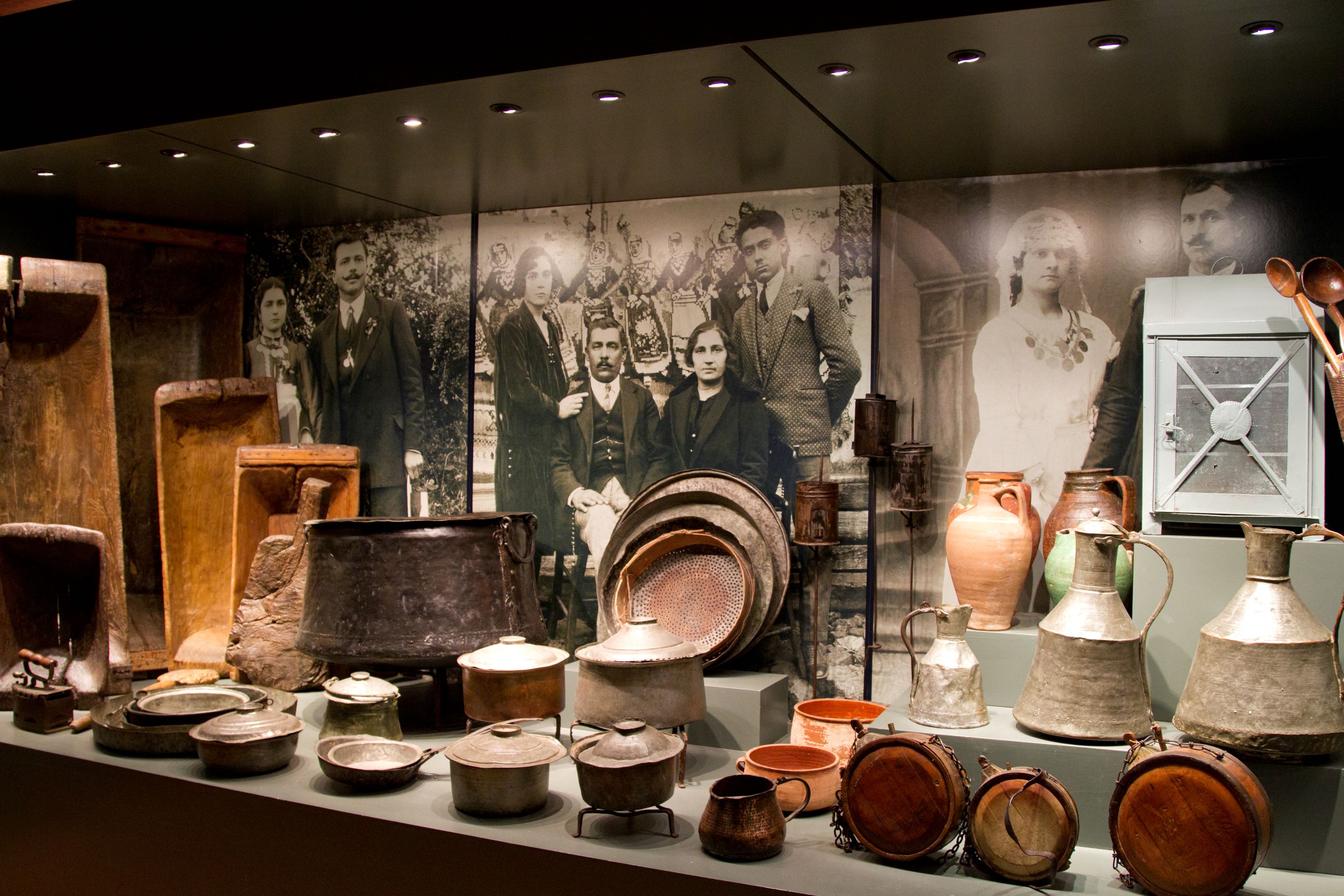
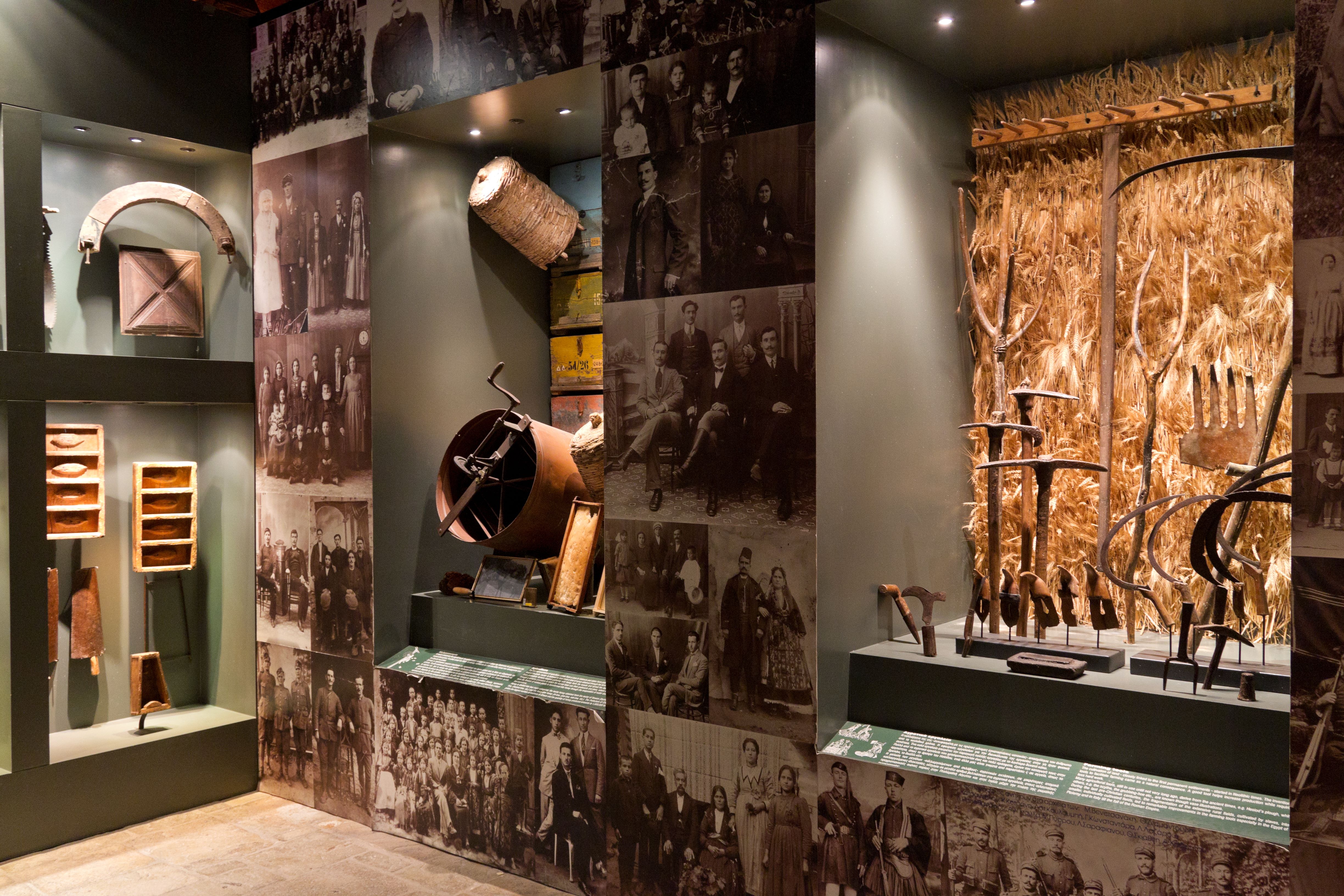
First, your visit begins with the rugged rhythms of rural Halkidiki. Surrounded by rare archival photography from 1880 to 1950, the ground floor explores how locals sustained themselves. For example, you will discover:
-
Beekeeping & Honey Production: Traditional hives and smoking tools from one of Greece’s premier honey-producing regions.
-
Daily Trades: Authentic implements used in stone masonry, bread baking, and mountain agriculture.
2. The Mezzanine: The Art of Wood and Coffee
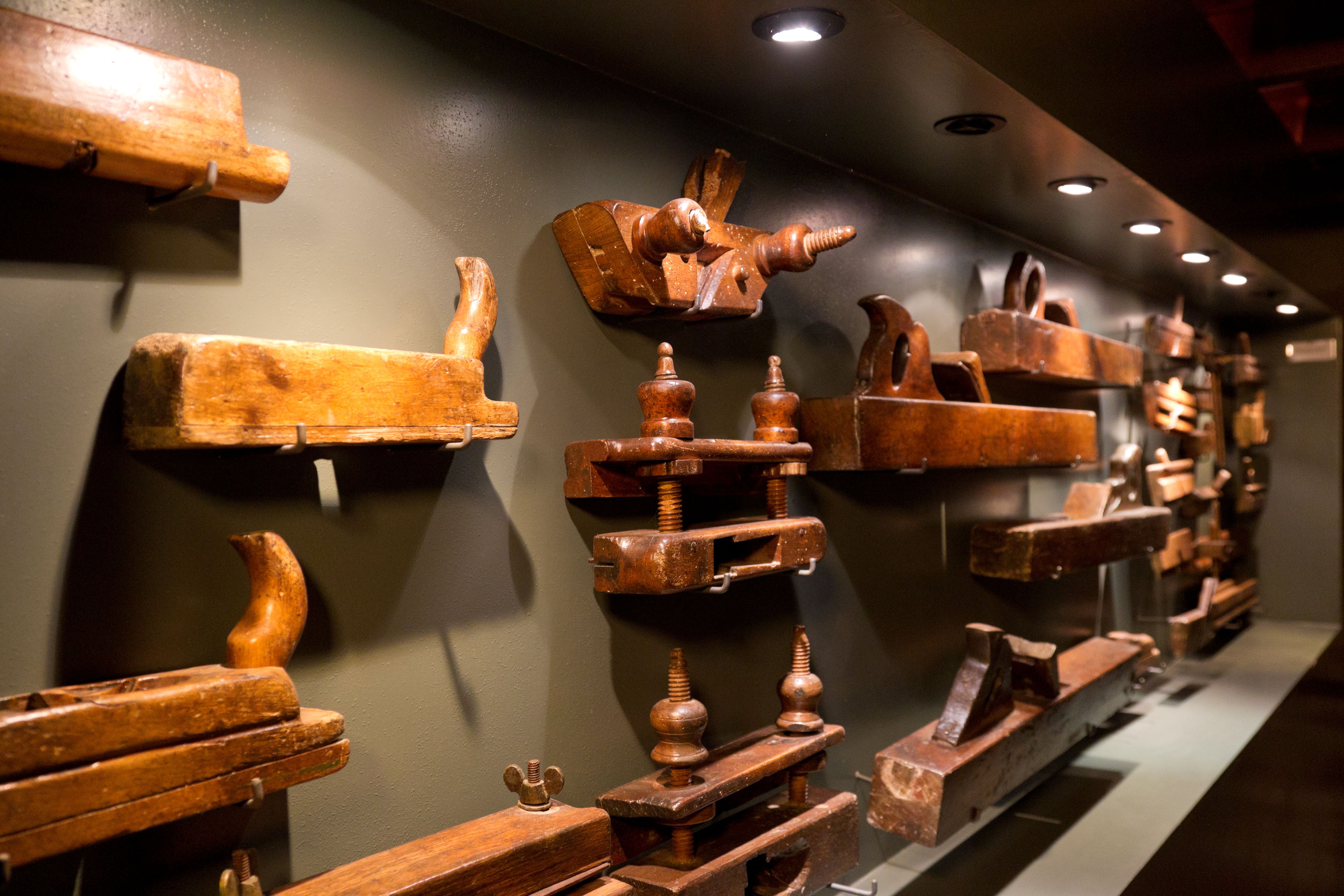
Next, as you climb to the mezzanine, the focus shifts to craftsmanship and community life. Here, the exhibits highlight two pillars of village culture:
-
The Carpenter’s Workshop: Hand-forged saws, planes, and carving tools that shaped Arnea’s iconic wooden balconies and ceilings.
-
The Traditional Kafeneio: Vintage brass pots (briki), roasters, and coffee sets from the village’s historic coffee houses.
3. The Upper Floor: Textiles, Costumes & Hearth
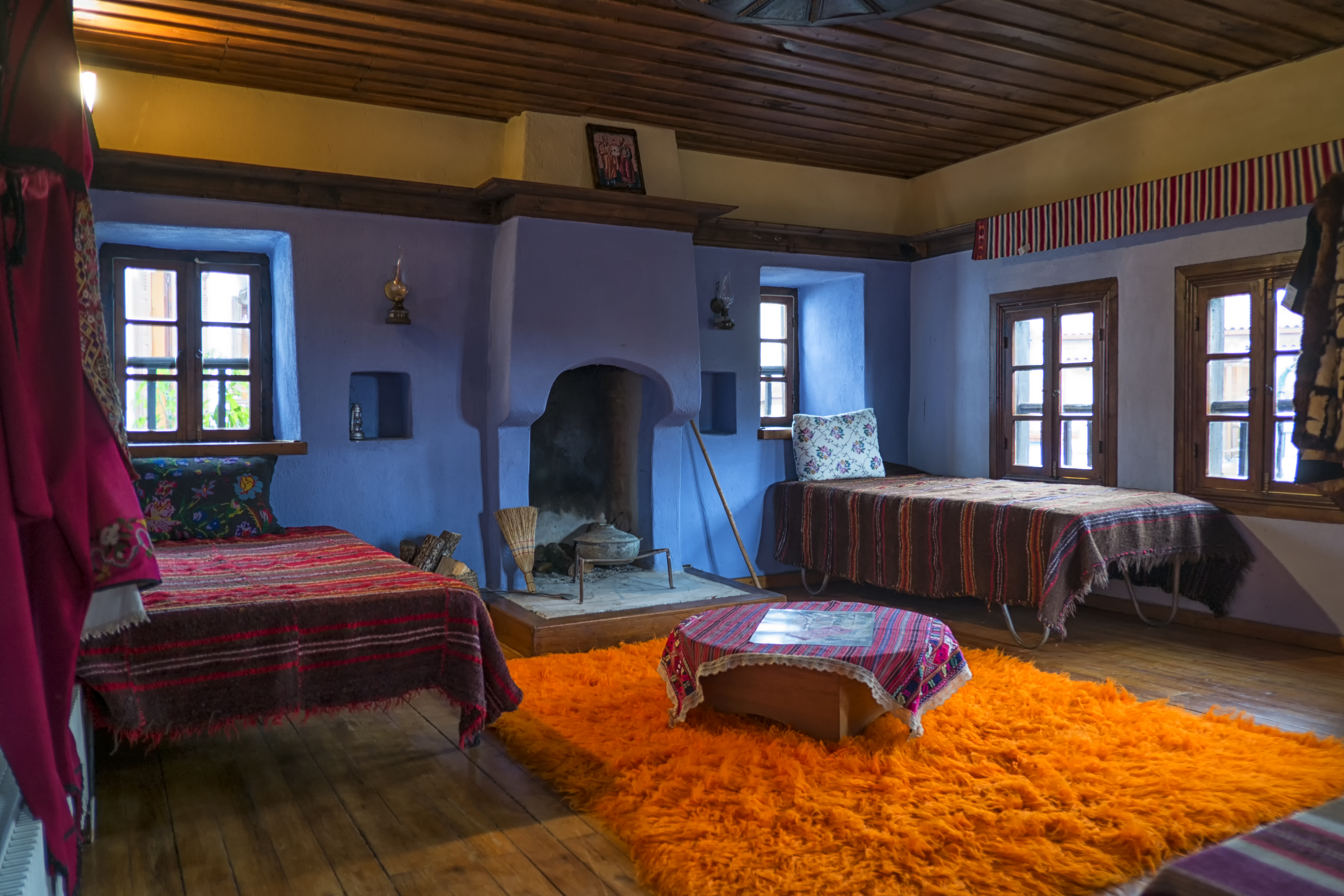
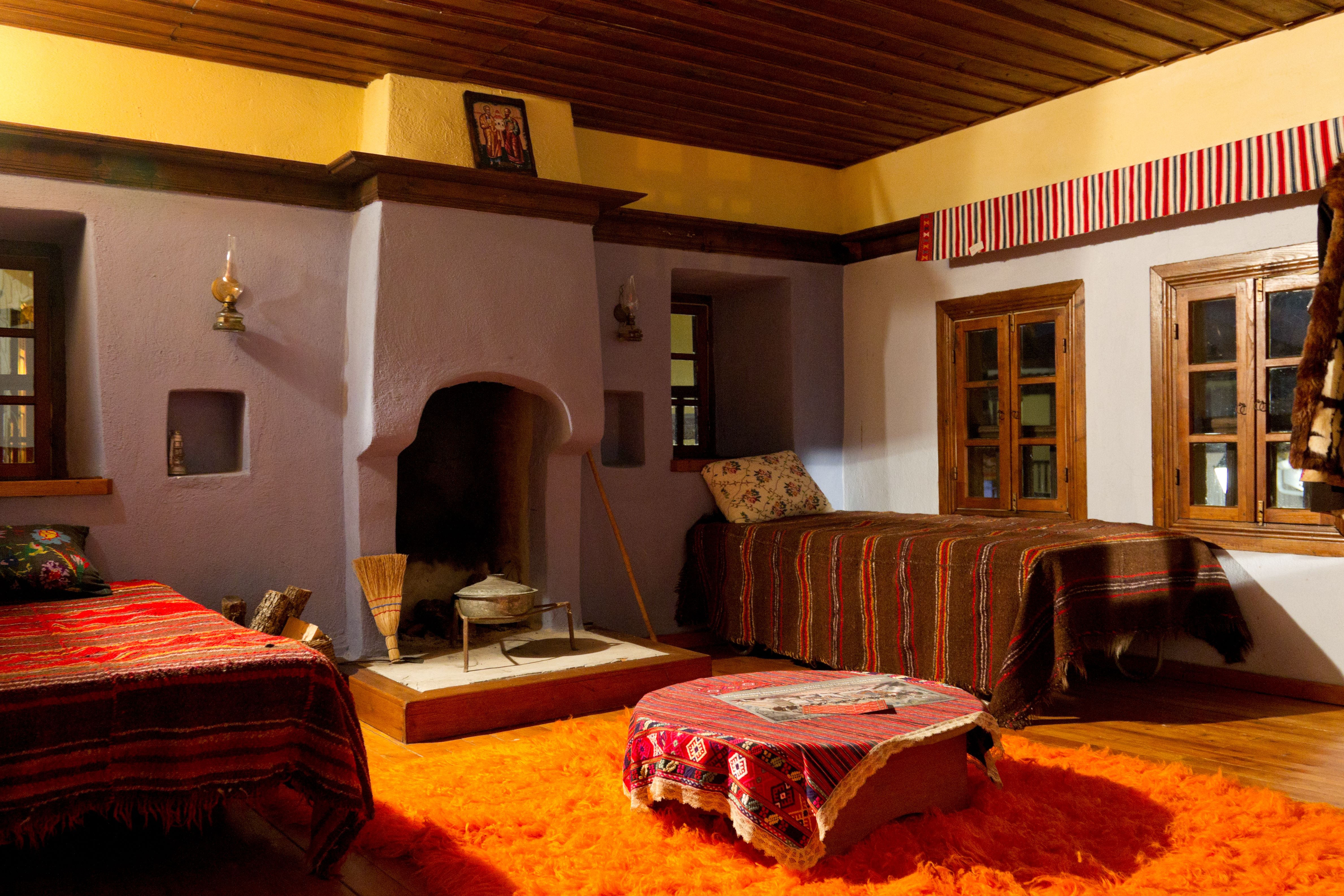
Finally, the top floor celebrates the domestic artistry of Arnea across 12 curated thematic sections. Most notably, this level features a full recreation of a traditional Arnea home interior. Consequently, visitors can experience the warmth of a mountain household up close:
-
The Loom & Famous Arnea Textiles: Inspect traditional wooden looms, spinning wheels, and the vibrant woven carpets that made Arnea famous.
-
Hearth & Home: Brass braziers for winter warmth, wooden washing boards, bread troughs, and ornate local costumes.
Don’t Miss: Two Extraordinary Artifacts
While exploring the upper floor, keep an eye out for two standout pieces of history. Surprisingly, both artifacts connect this quiet mountain village to much wider historical events:
-
The 200-Year-Old Ancient-Tech Fire Engine: Long ago, modern fire trucks did not exist. Instead, locals protected their wooden homes with a hand-operated bronze fire pump. Over two centuries old, its dual-piston water chamber uses the force-pump principle invented by Ktesibios of Alexandria (285–220 BC). Specifically, water flows through bronze receptacles fitted with twin pistons to build pressure.
-
The 1941 Village Radio: In addition, you can examine the very first radio receiver ever brought to Arnea in 1941. During a pivotal moment in history, this single device connected the remote mountain community to the outside world.
Complete the Experience: Just steps away from the Yiatradiko sits the Weaving Museum of Arnea. Moreover, your general admission ticket covers both museums. Thus, you can easily dive deeper into the intricate art of Macedonian carpet and textile weaving.