
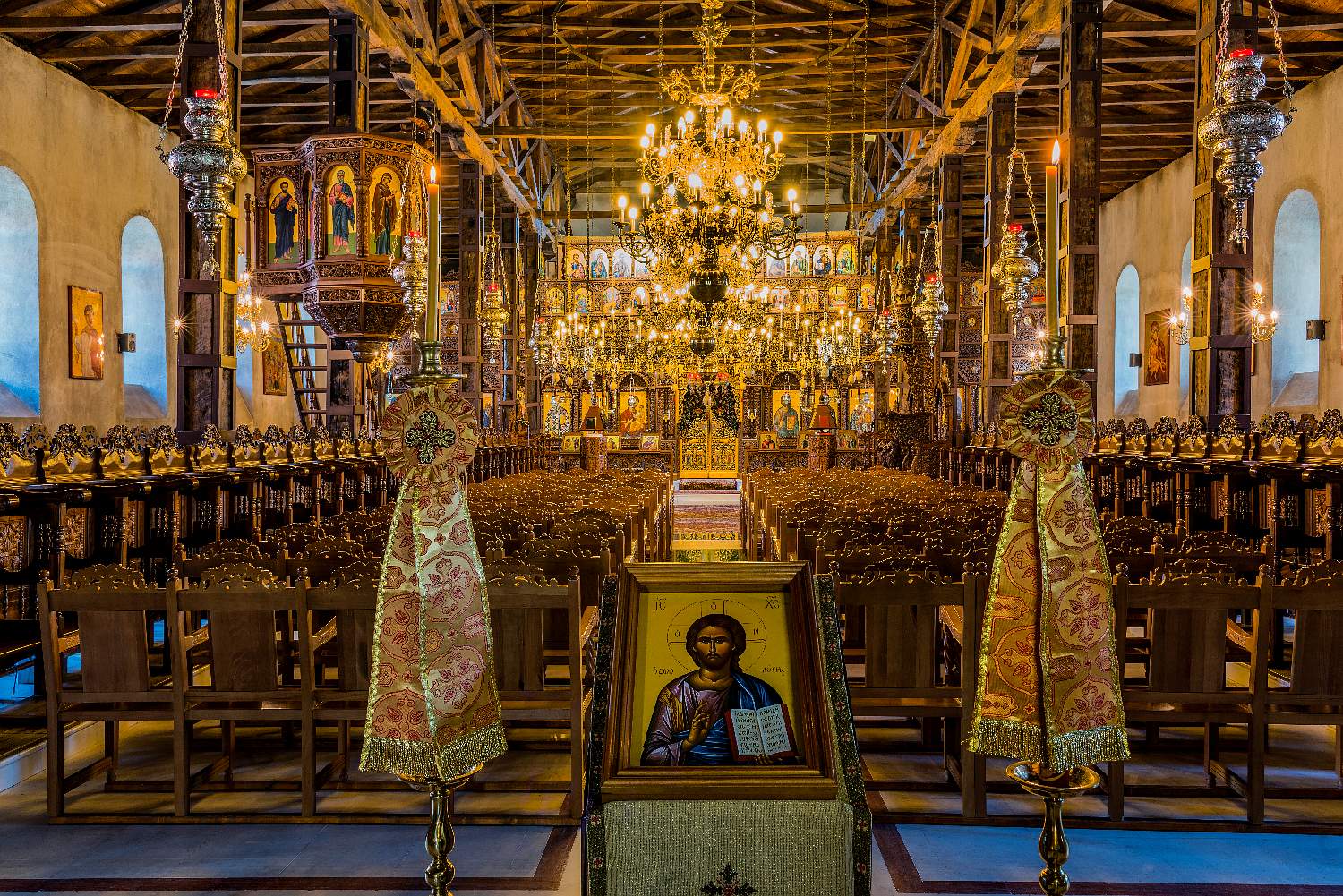
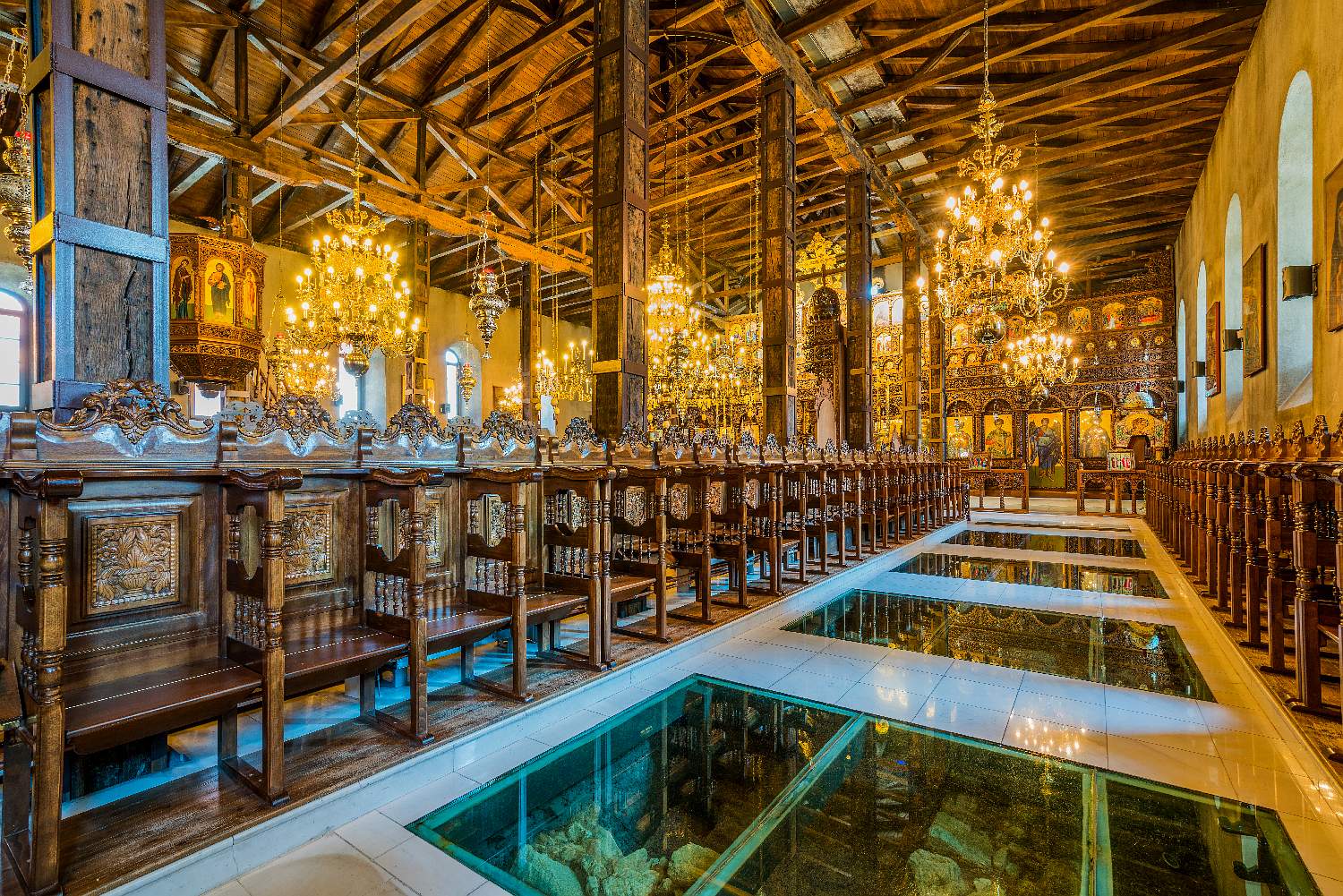
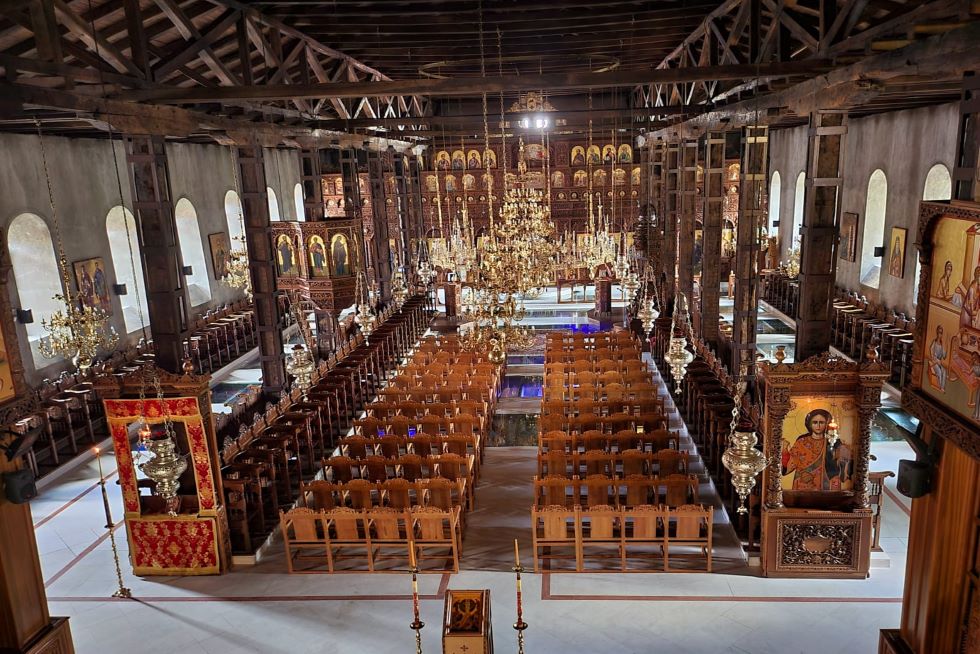
Standing as a monumental masterclass in historical layers within the traditional town of Arnea, the Metropolitan Church of Saint Stephen is one of the most structurally unique religious sites in Greece. Originally built in 1812, this grand three-aisled basilica holds a fascinating secret beneath its floorboards. Following a devastating fire in 2005, extensive excavations revealed that the modern church stands directly on top of three older historical temples. Today, a specially constructed glass floor allows visitors to peer straight through the active house of worship into centuries of hidden Christian history.
1. A Sanctuary Reborn from the Ashes
The modern history of Saint Stephen is closely intertwined with the regional struggles of Macedonia. Built in 1812, the massive stone church quickly became the pride of Arnea. However, during the outbreak of the 1821 Greek War of Independence, Ottoman forces set fire to the entire village to crush the rebellion, completely burning the church down to its foundations. Undeterred, the resilient local community rallied to rebuild the massive temple exactly as it was.
In September 2005, disaster struck again when a severe electrical fire tore through the interior, reducing the wooden roof, fine icons, and flooring to ash. Yet, this tragedy accidentally opened an extraordinary archaeological window. When researchers stepped in to clear the debris and restore the foundations, they discovered a subterranean timeline of ancient foundations that completely rewrote the history of the town.
2. Peer Through Time: The Three Hidden Layers
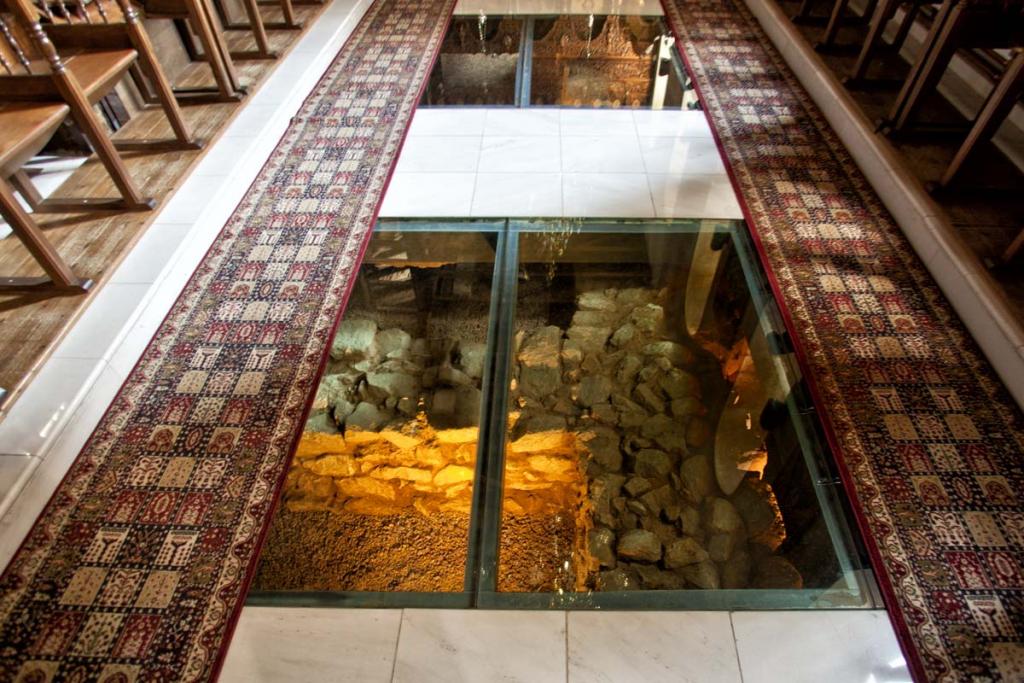
Instead of covering the historic foundations back up with a standard wooden or marble floor, the Ministry of Culture installed massive panels of heavily reinforced glass over the central aisles. Walking inside the church allows you to look directly into the open excavation pits below.
The underlying archaeological levels reveal three distinct periods of architecture:
-
The Early Christian Basilica (circa 400 AD): The deepest layer reveals the expansive contours of a large, early Christian church from the late Roman era, proving that a major settlement thrived on these mountain slopes centuries earlier than previously recorded.
-
The Byzantine Temple (10th-11th Century): Positioned within the center of the old basilica layout are the smaller, highly solid stone foundations of a middle-medieval Byzantine house of worship.
-
The Post-Byzantine Structure (16th-17th Century): The highest underground layer features building elements and structural additions dating to the period of Ottoman occupation, providing a clear map of how the church footprint expanded over generations.
3. Unearthed Treasures on Public Display
The glass floor does more than showcase stone walls; it leaves an entire ancient lifestyle on display exactly where it was discovered. As you walk toward the altar, the lit subterranean chambers reveal a variety of historic artifacts, including ancient coins, specialized pottery, and fragments of early decorative glass.
Excavators also uncovered fifteen historic tombs beneath the foundations, containing traditional burial offerings and skeletal remains that offer deep insights into the original populations of mountainous Halkidiki. Today, the upper church continues to hold regular Sunday services and major community events. The pairing of modern liturgical life with the visible ancient layers makes Saint Stephen an absolute masterpiece of historical preservation.
Travel Tip for Explorers: Because Saint Stephen is a fully functioning parish church, dress respectfully (covering shoulders and knees) when entering. Admission is entirely free, and the interior lighting system makes it easy to photograph the archaeological layers through the glass panels. Pair your visit with a walking tour of Arnea’s historic district, located right outside the doors. After exploring the church, step across the cobblestone square to visit the nearby Weaving Museum and the local Folklore Museum to complete your journey into Macedonian mountain heritage.