
Byzantine Tower in Nea Fokea: The Medieval Guardian of Kassandra
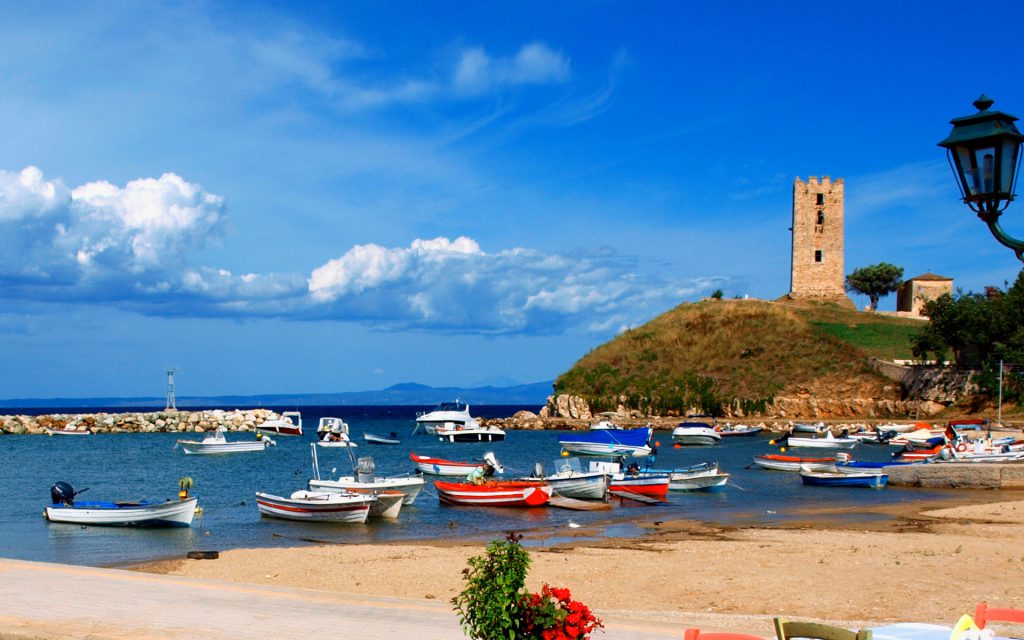
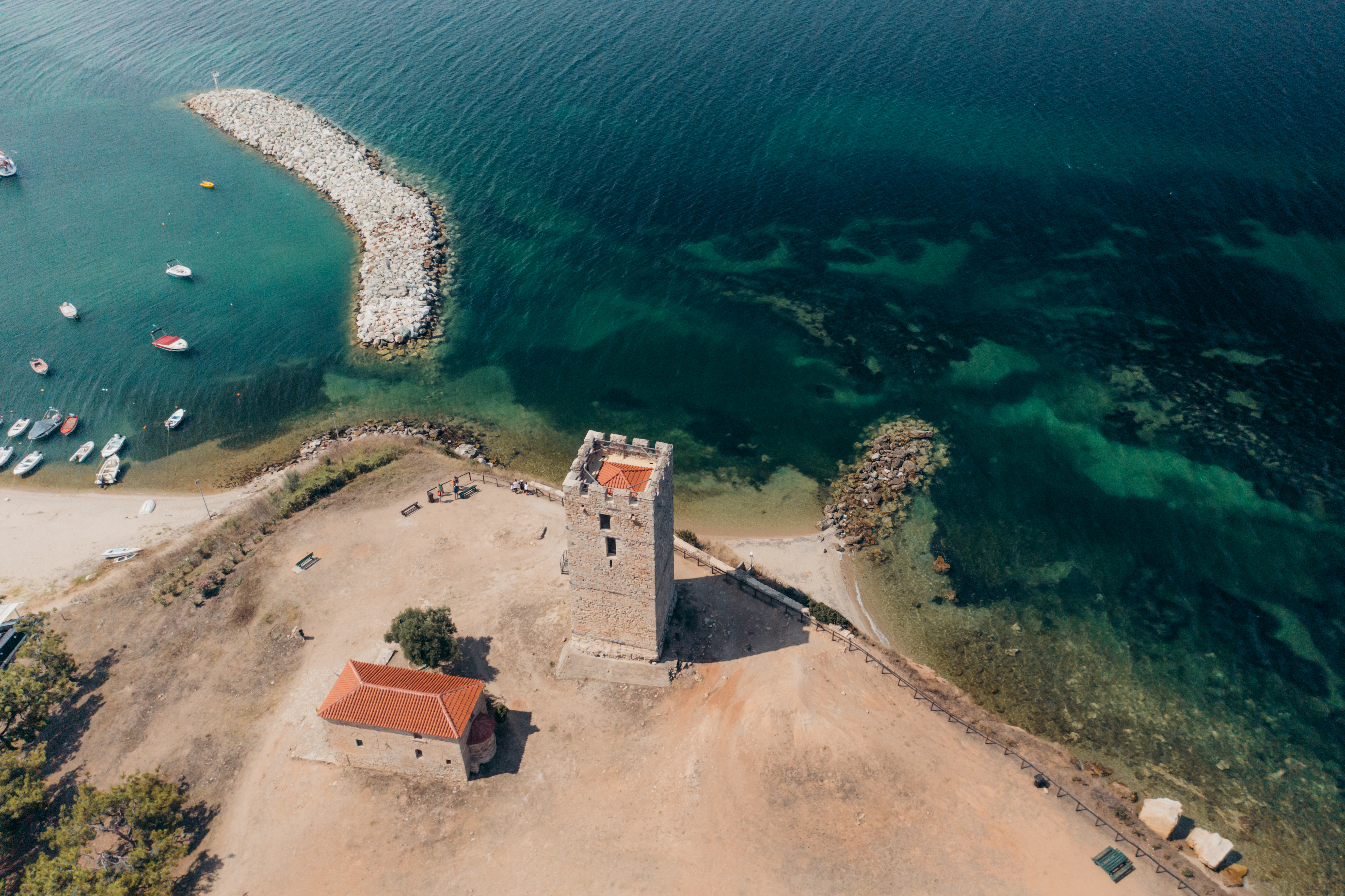
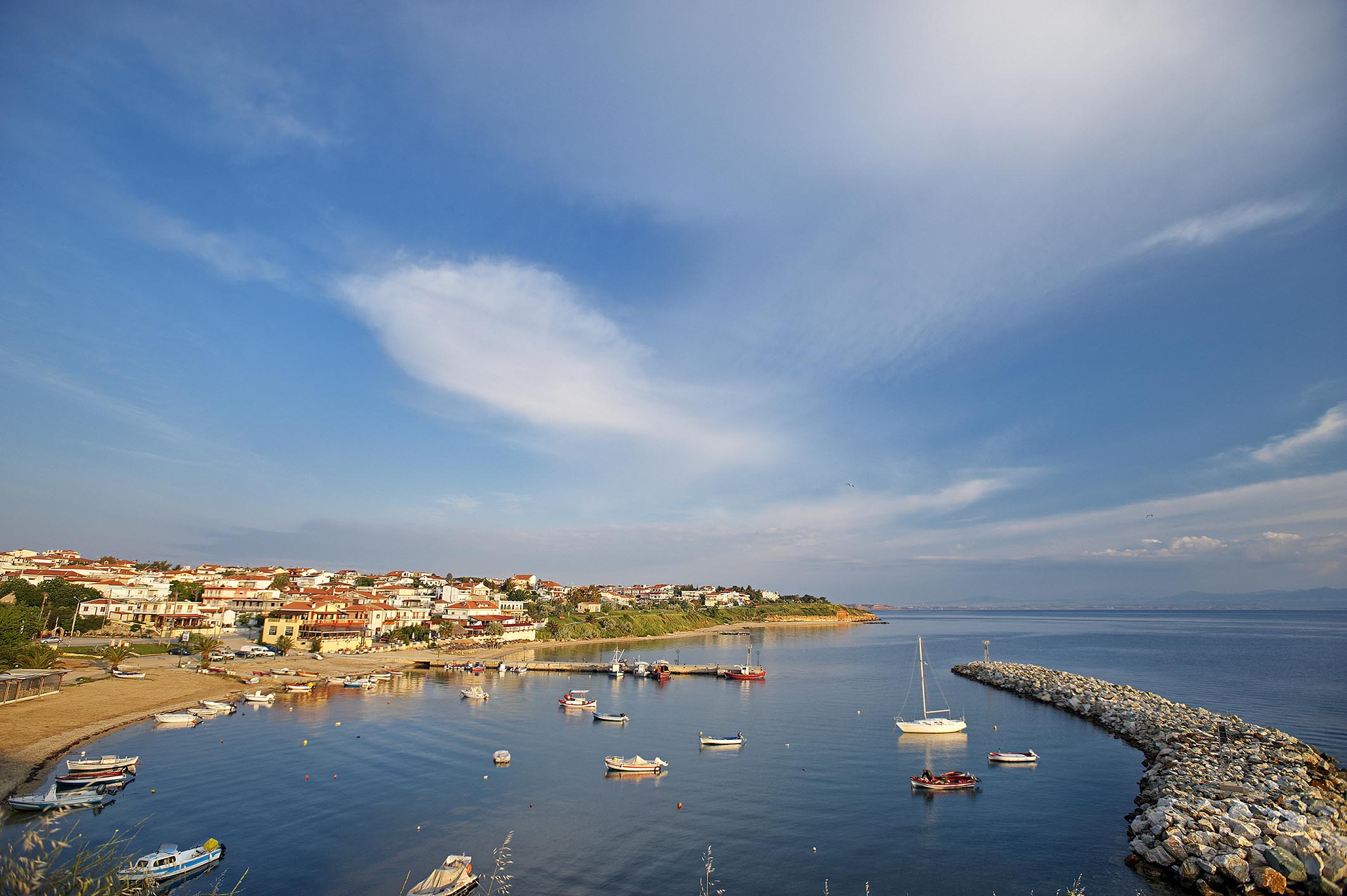
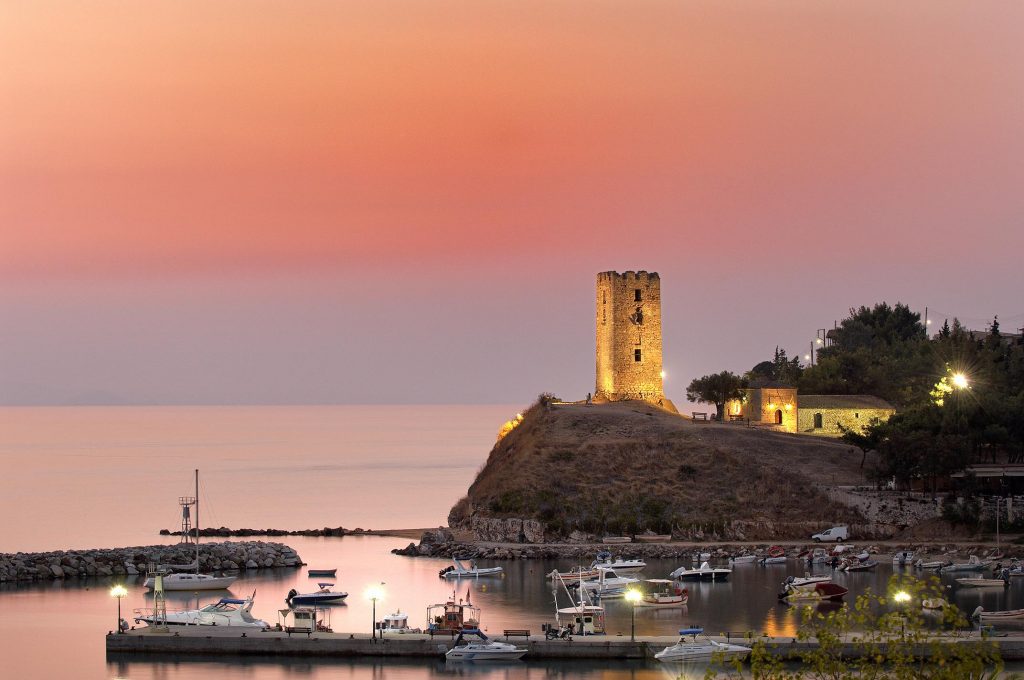
Standing above the harbour of Nea Fokea, the Byzantine Tower is one of Halkidiki’s most recognisable landmarks. Built on a rocky headland, it overlooks the sea and the coastline of Kassandra.
The tower dates back to 1407. It protected the lands of the Saint Paul Monastery of Mount Athos and defended the area from pirate attacks. Today, it remains one of the best-preserved Byzantine towers in Halkidiki.
Known locally as the Tower of St. Paul, this impressive fortress offers a unique glimpse into the region’s medieval past, monastic heritage and role in the Greek War of Independence.
Protecting the Lands of Mount Athos
The Byzantine Tower of Nea Fokea was built to protect a metochi—an agricultural estate owned by a monastery of Mount Athos.
The fertile lands of Kassandra provided essential supplies for the monks. They produced wheat, olive oil and livestock, which helped sustain the communities of the Holy Mountain.
In 1407, John VII Palaiologos, ruler of Thessaloniki, granted the area to the Saint Paul Monastery. The monks soon built the tower to protect their property from frequent pirate raids.
For centuries, the fortress guarded valuable harvests and offered shelter to local farmers during attacks. Its strong stone walls became a symbol of protection and resilience.
A Remarkable Example of Medieval Architecture
The tower reflects the defensive architecture of the late Byzantine period. Its design focuses on strength, stability and protection.
Builders used local stone and reinforced the walls with wooden beams. These hidden supports helped the structure withstand movement and earthquakes.
The tower’s entrance added another layer of defence. Instead of a door at ground level, the original entrance stood high above the ground. Visitors reached it through a wooden bridge or ladder, which could be removed during attacks.
Around the tower, you can still see remains of the old monastic complex. Nearby stands a small 19th-century chapel dedicated to the Holy Apostles, featuring a traditional wooden roof.
A Stronghold of the 1821 Revolution
The tower played an important role centuries after its construction. During the Greek War of Independence in 1821, it became the headquarters of the Macedonian revolutionary leader Emmanouil Pappas.
From this strategic location, Pappas organised military operations across Kassandra and supported the local fighters.
Ottoman forces later destroyed the surrounding monastic buildings, but the tower survived. Its strong walls became a lasting symbol of resistance and courage.
In 1922, the abandoned lands around the tower welcomed Greek refugees from Asia Minor. Their arrival shaped the development of modern Nea Fokea.
Traveler’s Tip: Add History to Your Beach Holiday
The Byzantine Tower is an easy stop to include in your Kassandra itinerary. It stands beside the main coastal road and is easily accessible.
Park near the harbour and follow the paved path to the tower. Take time to admire the stone architecture and explore the remains of the former monastic settlement.
For a deeper cultural experience, visit the nearby Agiasma of St. Paul. This underground rock-cut passage and holy spring are connected with local traditions about the journey of Saint Paul.
After exploring the past, continue to the nearby beaches of Nea Fokea and enjoy the perfect combination of history, sea and authentic Halkidiki.