
Aristotle’s Park: The Interactive Science Sanctuary of Mountainous Halkidiki
Perched on a scenic, wind-swept ridge in mountainous North Halkidiki, Aristotle’s Park seamlessly bridges ancient Greek philosophy with modern experimental science. Located in the historic village of Stagira—the birthplace of the great philosopher Aristotle—this unique theme park stands at an altitude of roughly 400 meters next to the ruins of Mahalas, the historic capital of the Mademochoria. Far from a static monument, it operates as the only thematic park in Halkidiki, featuring a series of open-air, interactive instruments that physically demonstrate the natural laws first recorded in Aristotle’s groundbreaking work, particularly Physics.
1. A Living Tribute to the Father of Logic
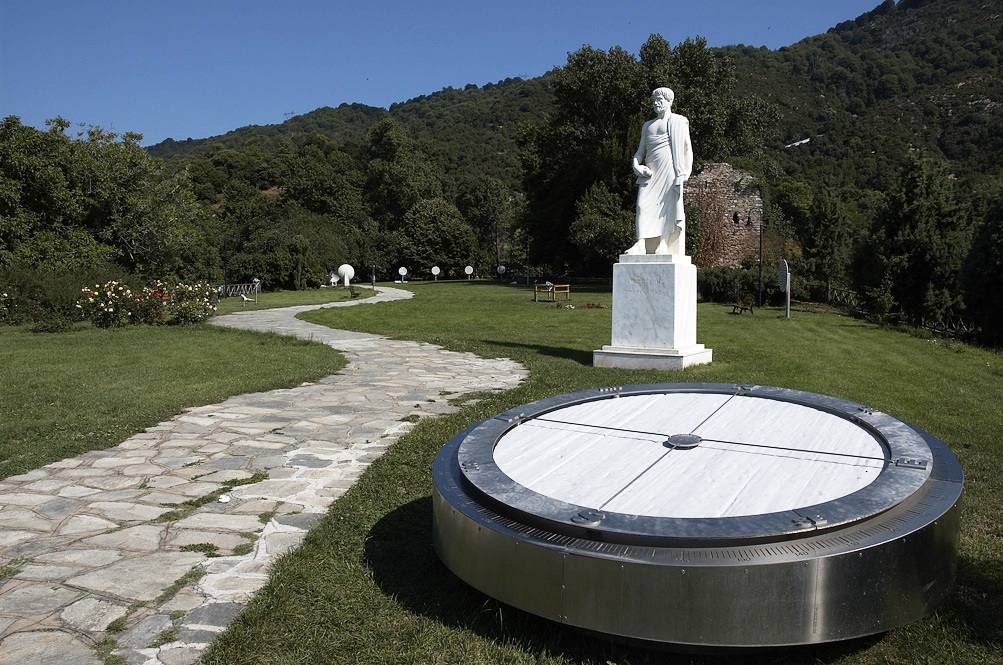
The pre-existing grove was originally selected in 1956 to host a magnificent statue of Aristotle, created by the renowned sculptor Nikolas to honor the philosopher born in ancient Stagira in 384 BC. Decades later, in 2003, the Municipal Enterprise of Stagira-Akanthos expanded the site by installing original, interactive physics instruments. In July 2015, the municipal enterprise brought in a specialized crew to clean the statue, fully restoring the original color and texture of its premium Dionysus marble from Attica.
The park functions as a living laboratory. By combining recreation, entertainment, and learning within the alpine landscape that originally inspired Aristotle, the site has become a beloved destination for individual travelers, family vacationers, and organized school groups.
2. Exploring the Interactive Physics Instruments
The central lawn of the park features an array of custom-built, experimental instruments. Each display encourages visitors to touch, turn, and experiment to see physical forces in real-time.
Key interactive instruments include:
-
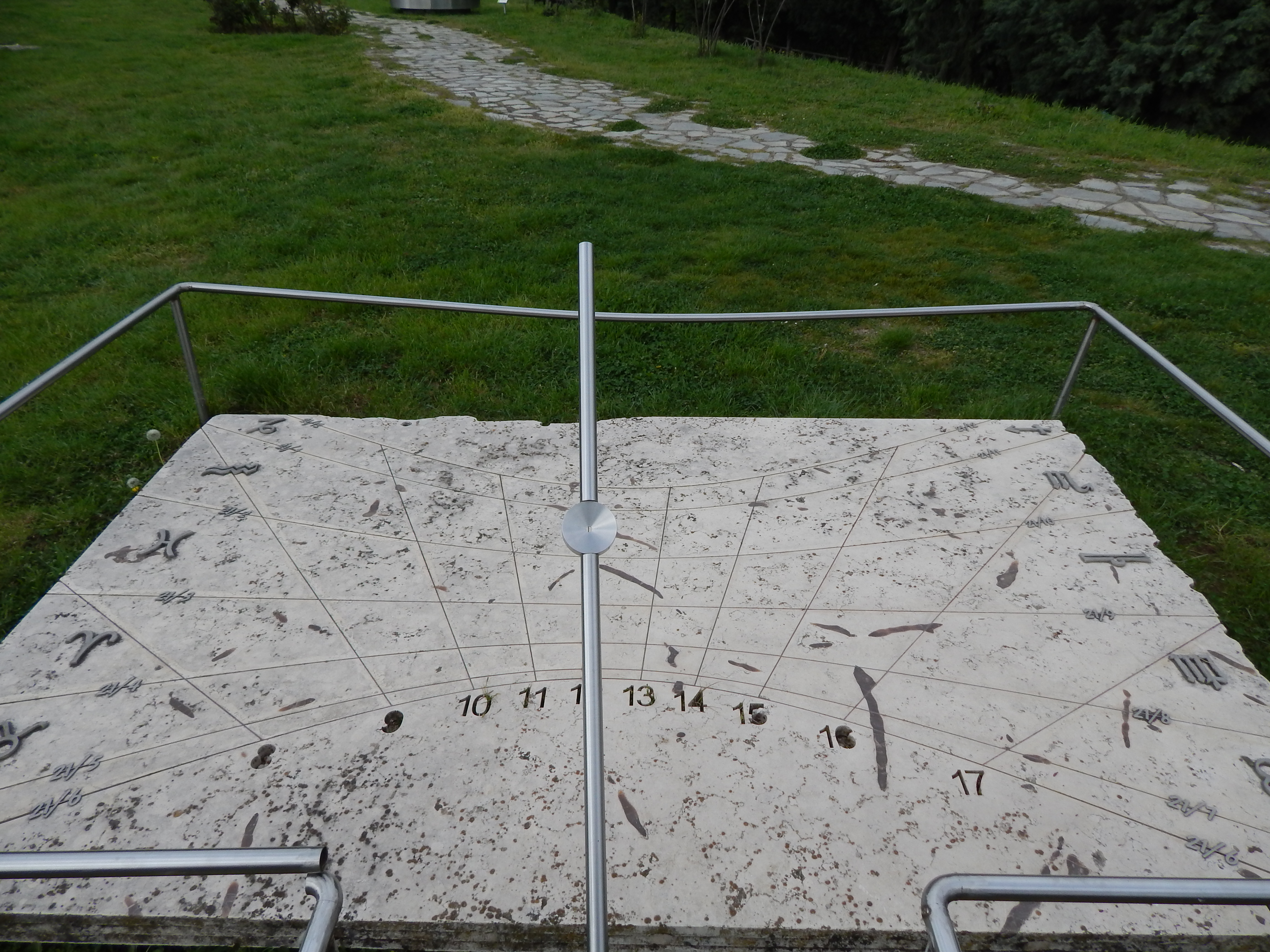
The Solar Clock and Compass: The horizontal solar clock calculates the exact local time based on the shadow cast by the sun, showing a difference from official time of 1:25 in summer and 0:25 in winter. The surrounding compass shows the direct path and distance to major global cities.
-
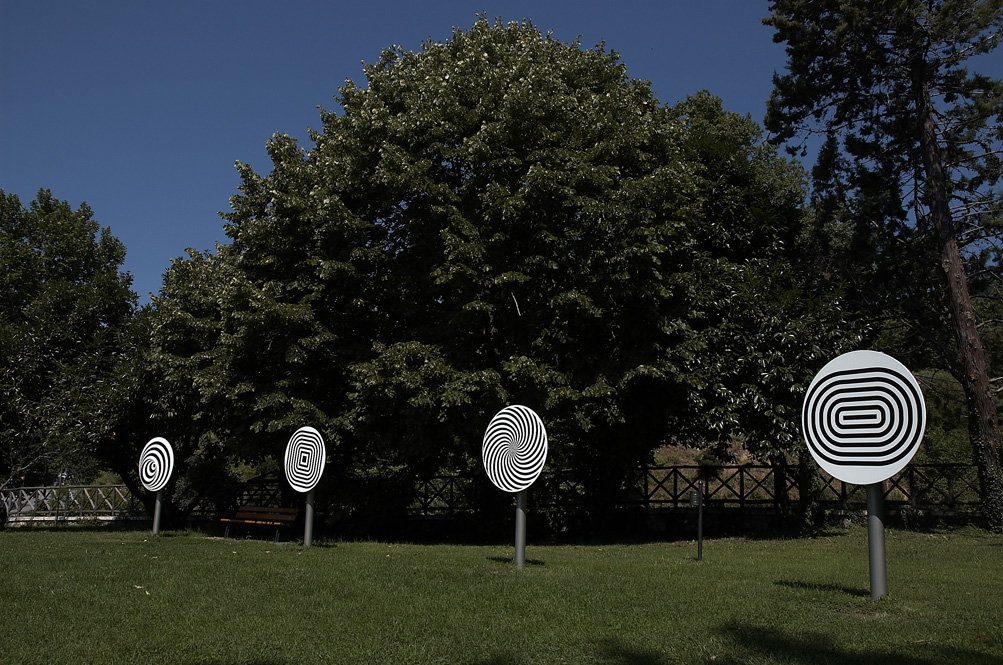
The Lens and Optical Disks: The lens exhibit demonstrates how concentrating individual photons of solar energy onto a single point dramatically increases heat. Nearby, the optical disks show how the human eye fails to perceive separate images when they pass at high speed, mimicking the early principles of cinema.
-
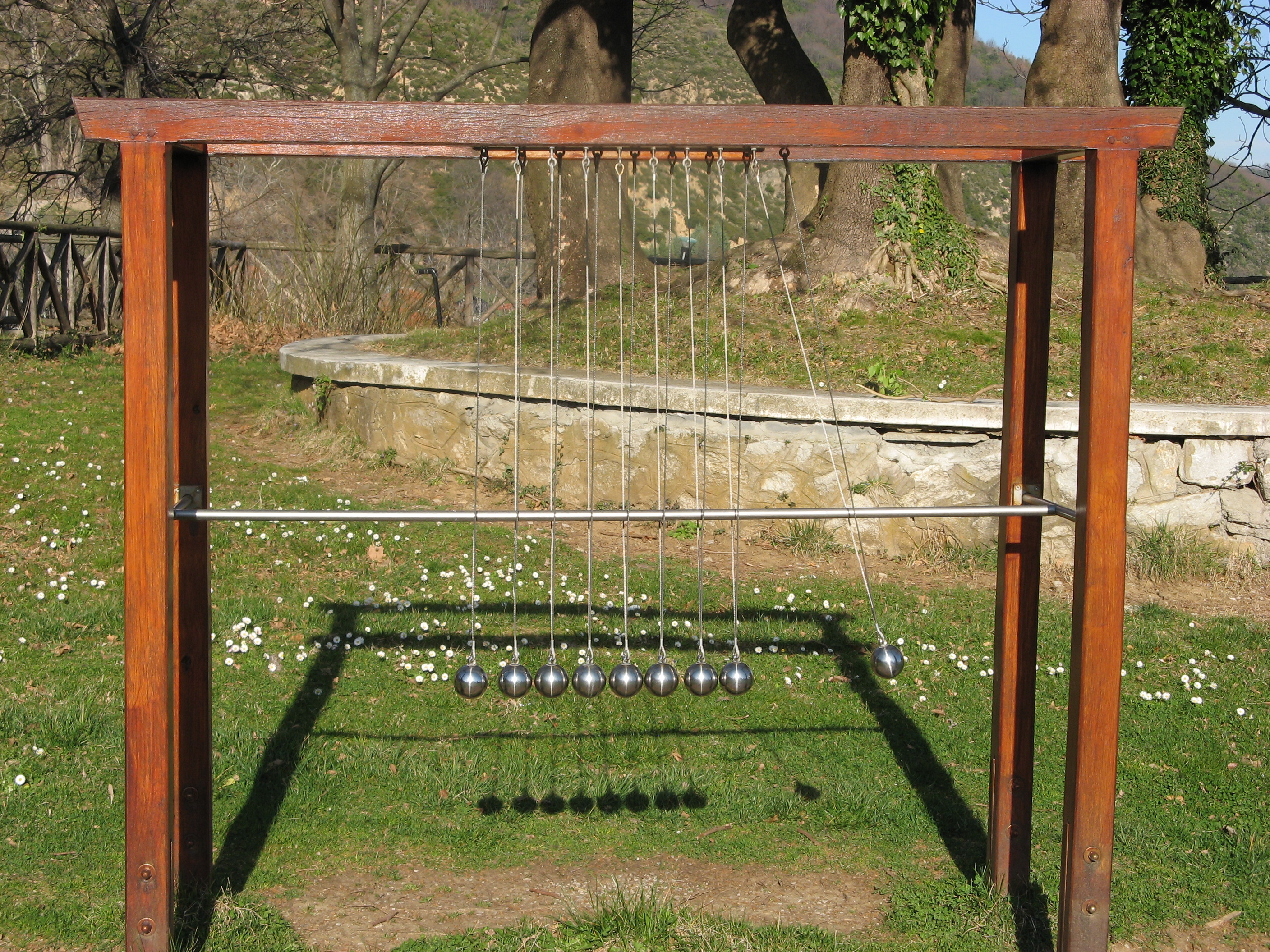
The Pentaphon and Pendulum: The pentaphon features five blocks of granite calibrated to the scale of the ancient pentaphon, showing how different specific gravities and masses produce distinct sound frequencies through percussion. The coupled pendulum demonstrates the transfer of kinetic energy from one oscillating system to another.
-
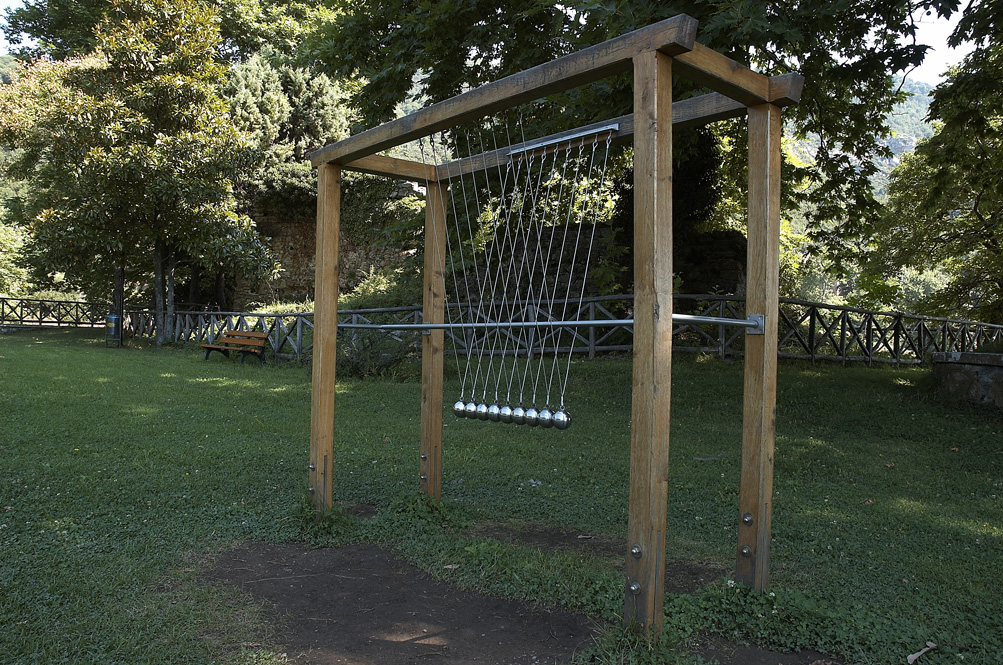
The Hydro-turbine and Inertia Spheres: Turning the heavy handle of the hydro-turbine creates a stable water vortex, showing how circular motion generates wind-like whirlwinds. The inertia spheres demonstrate the sequential conservation and transfer of momentum upon collision.
-
The Parabolic Mirrors: Positioned several meters apart, these curved structures reflect sound waves carried by the wind, concentrating the audio energy perfectly at the center point so a whisper can be heard from far away.
-
Aristotle’s Clock: Installed in 2019, this unique exhibit replicates a hydraulic alarm clock that Aristotle invented to limit his sleep and dedicate more time to his studies. Operating like a large hourglass, it drops small stone spheres onto a metal dish to create an earsplitting wake-up sound once the water volume fills.
3. The Madem Aga Tower: History Meets Science Inside the Park
Beyond the scientific instruments, visitors can explore important medieval history without leaving the grounds. Standing directly inside the park area are the stabilized stone walls of the Madem Aga Tower and his surrounding konak (administrative mansion). During the early period of Ottoman occupation, this complex served as the absolute administrative and military center for the lucrative silver and gold mines in the Sidirokafsia region. The tower operated as a treasury and a stronghold to safeguard precious metals and tax revenue. The adjacent hill of Agios Dimitrios still preserves the remnants of this mining hub, which even featured its own regional mint. This unique layout allows visitors to explore ancient Greek science, medieval mining administration, and traditional Macedonian nature within a single walking path.
Travel Tip for Explorers: Plan your visit between the operating hours of 8:30 a.m. and 8:30 p.m. to make full use of the site. After testing the parabolic mirrors and Aristotle’s hydraulic alarm clock, take advantage of the free public telescopes installed on the ridge. These lenses provide a razor-sharp panoramic view extending across Ierissos Bay and the Athos Peninsula. The grounds also feature an on-site cafe-restaurant and a souvenir shop, making it easy to pair your scientific exploration with a relaxed lunch overlooking the gulf.
Visiting information
Opening days & hours
Daily
08:30-20:30
Tickets:
Regular: 2 euro
Groups (from 10 people or more) & families: (from 4 people or more) : 1,50 euro
Children and young people aged (6 to 17 years old) & young people who hold European Student IID Card: 1 euro
Children up to 6 years old and people with special needs: FREE OF CHARGE