
Where Continuous Golden Sand Meets Palm-Lined Strides
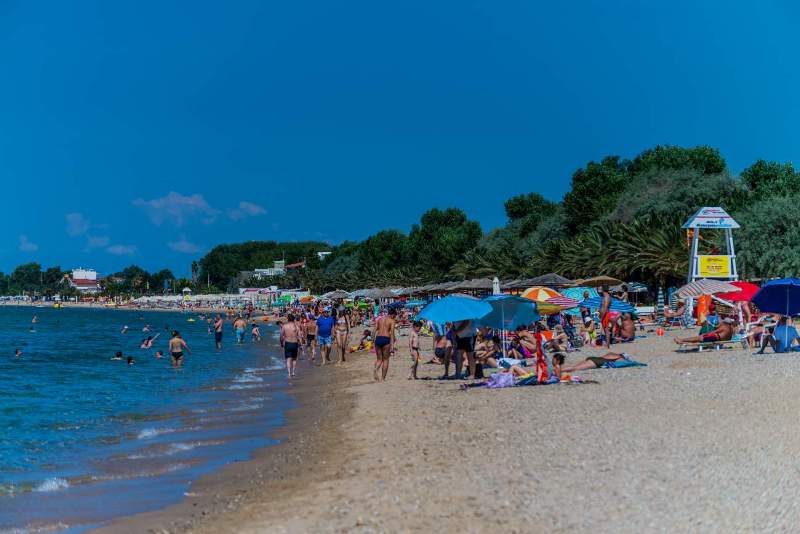
Flogita acts as a powerful magnet for travelers seeking a highly active, fully organized beach destination. Founded in 1922 by settlers from Cappadocia, this booming coastal town features a seamless layout that merges directly into its neighboring village, Nea Plagia, creating a massive, uninterrupted multi-kilometer beach front.
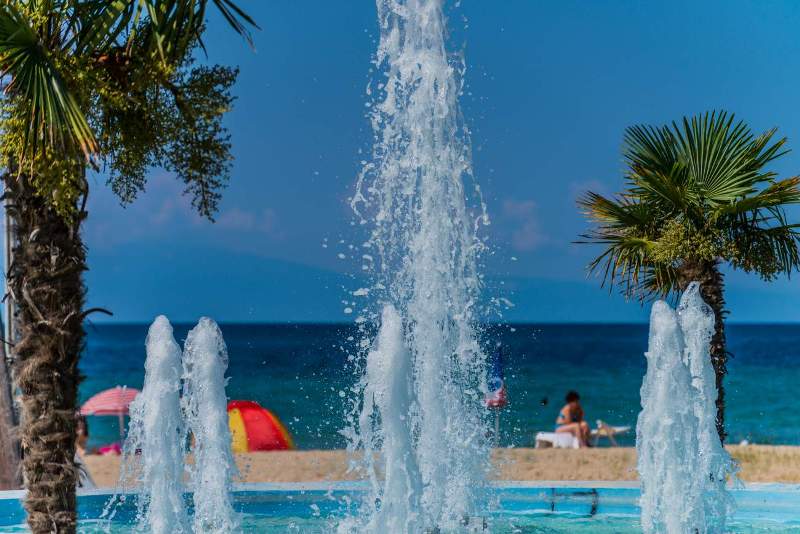
The defining feature of the town is its magnificent, paved pedestrian promenade. Shaded by rows of mature palm trees and lined with lush green lawns, it provides a scenic pathway for travelers strolling between seaside cafes, lively cocktail bars, and family tavernas.
A Hub for Active Beaches and Clear Shallows
The immense shoreline of Flogita delivers a perfect balance of comfort, family safety, and water sports activity.
-
The Sandy Expansion: The beach features fine, soft sand that extends deeply into the warm, crystal-clear shallows of the gulf. This gentle, gradual drop makes it an exceptionally safe and easy environment for children to enjoy.
-
The Beach Bar Strips: As the sun rises, the coast awakens with rhythm. Fully serviced beach bars offer premium sunbeds, excellent iced coffees, and upbeat music that sets a lively Mediterranean mood.
-
Active Water Sports: Adrenaline seekers can dive straight into action here. The beach serves as a regional hotspot for jet-skiing, windsurfing, stand-up paddleboarding (SUP), and fun towable water rides.
The Cultural Epoch: The Byzantine Museum
Just a short distance inland from the lively, palm-fringed coastal promenade lies the “Justinianus” Center of Byzantine Culture. This imposing 27-acre complex breathes a quiet, historical gravity into your sun-soaked seaside escape.
The Layered History of the Monastic Dependency
The site was established during the Byzantine era as a metochi (a fortified monastic dependency or estate) under the jurisdiction of the Holy Monastery of St. Panteleimon of Mount Athos.
-
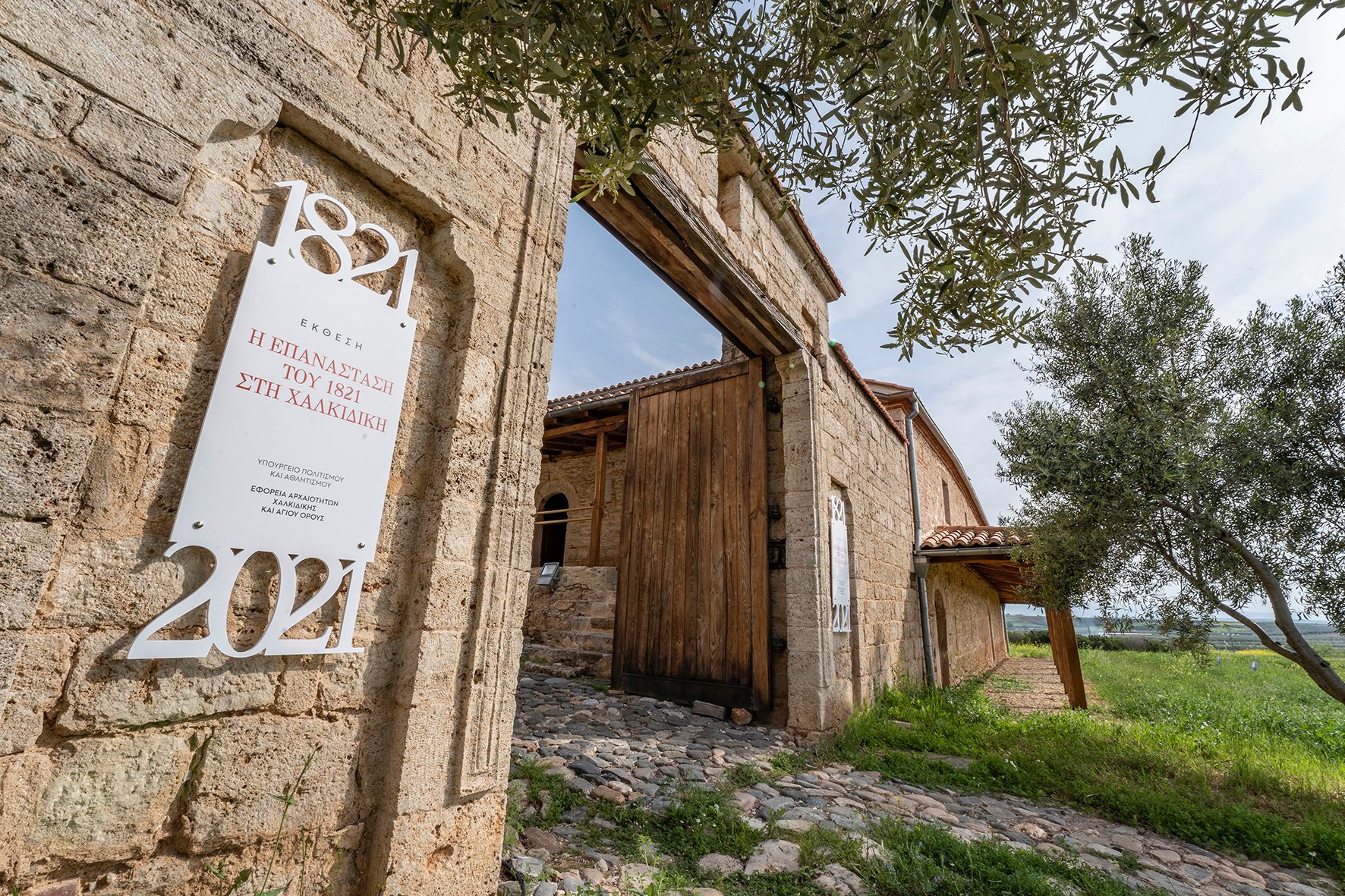
The Russian Inscriptions: While its written history traces back to an imperial decree by Emperor Andronikos II Palaiologos in 1311, the striking stone buildings standing today were erected in 1884. If you look closely at the external stone masonry, you can still spot embedded Russian signplates dating from its 19th-century construction.
-
A Sanctuary of Relief: Following the geopolitical shifts of 1922, the historical complex served as an emergency American Red Cross hospital to support incoming refugees arriving from Cappadocia. It was subsequently occupied as a military headquarters during WWII before fading into decades of quiet abandonment.
Inside the Byzantine Museum of Halkidiki
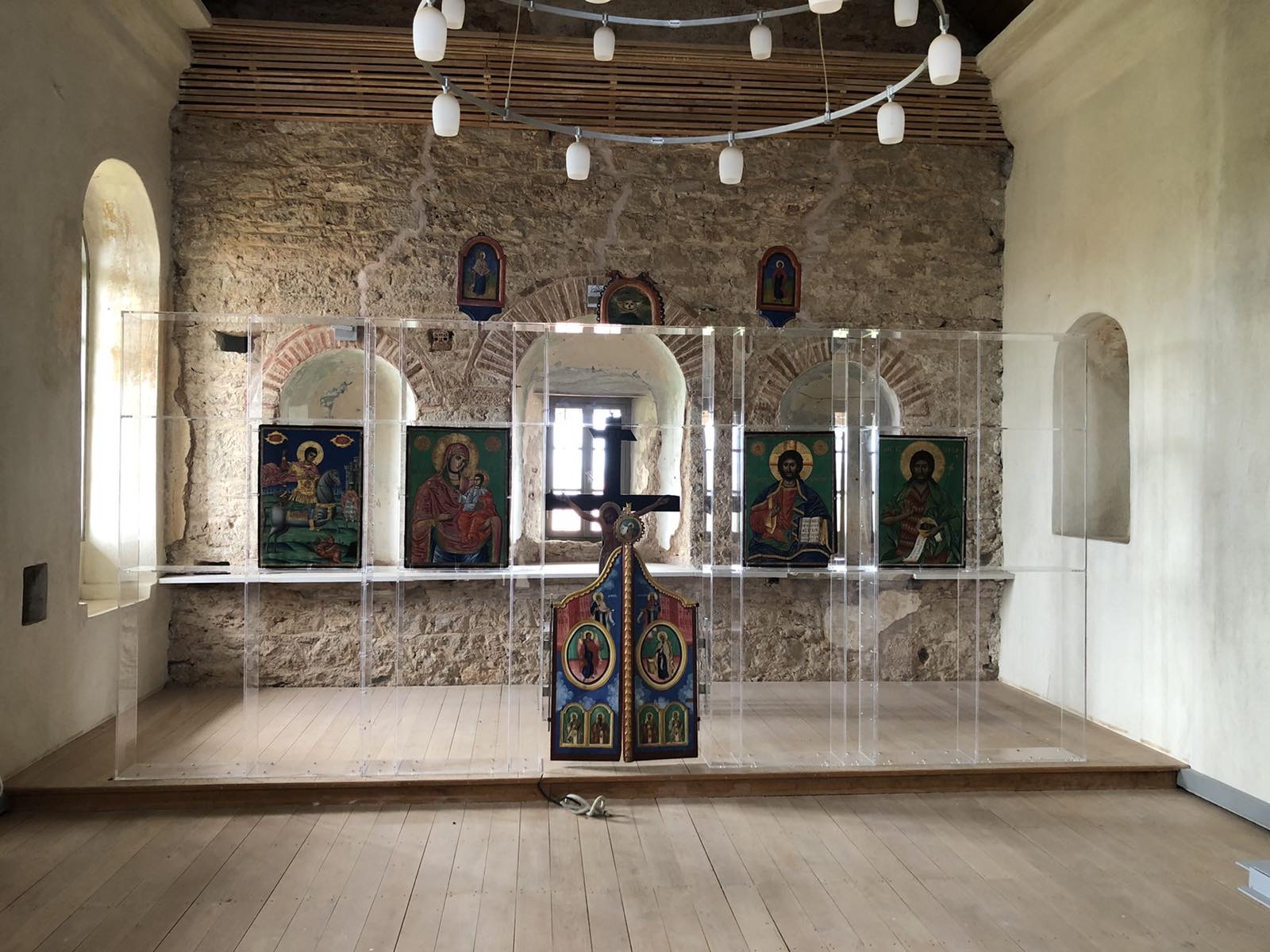
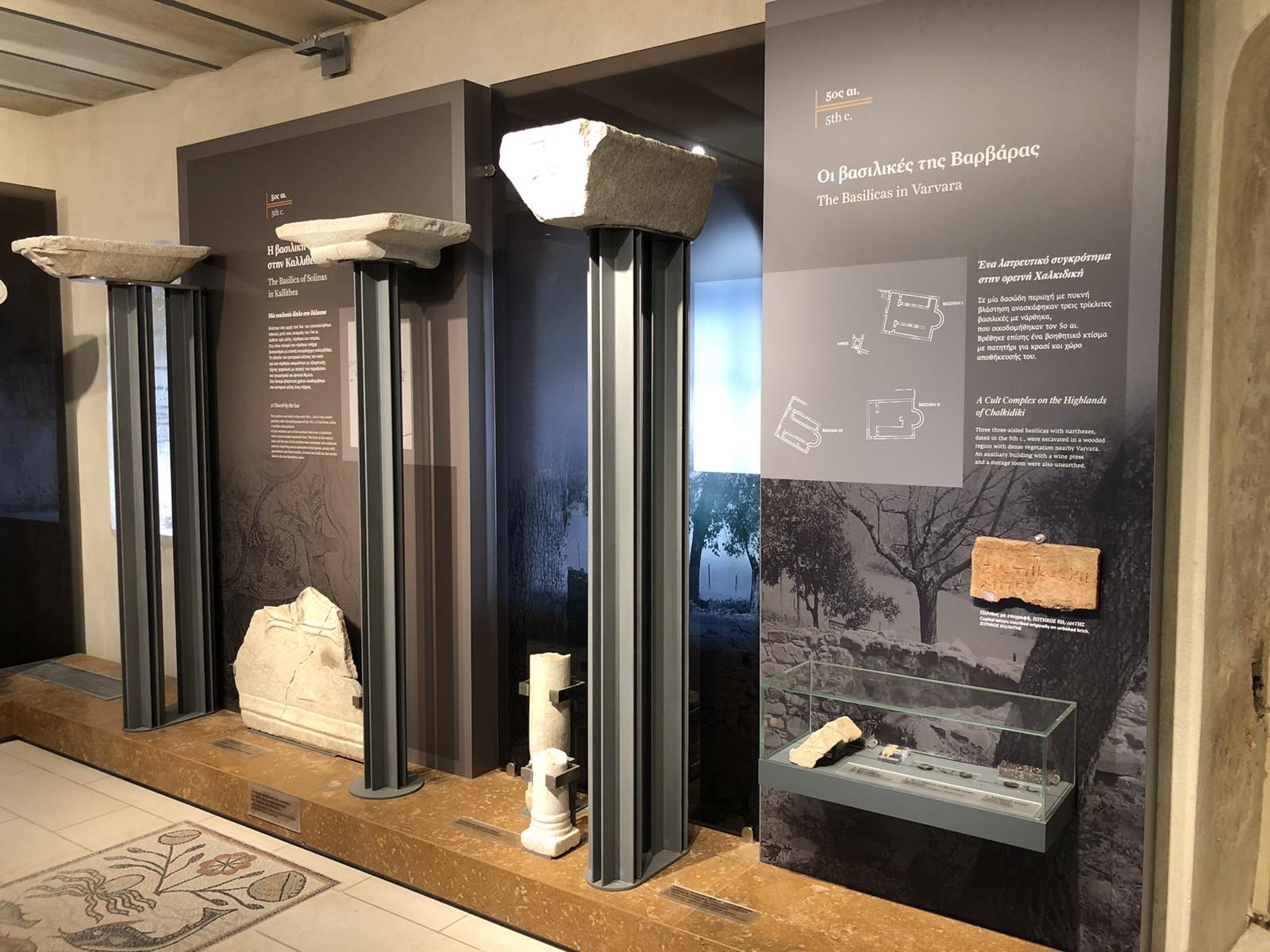
Today, the magnificently restored, two-story stone central building with its elevated chapel functions as the official Byzantine Museum of Halkidiki.
-
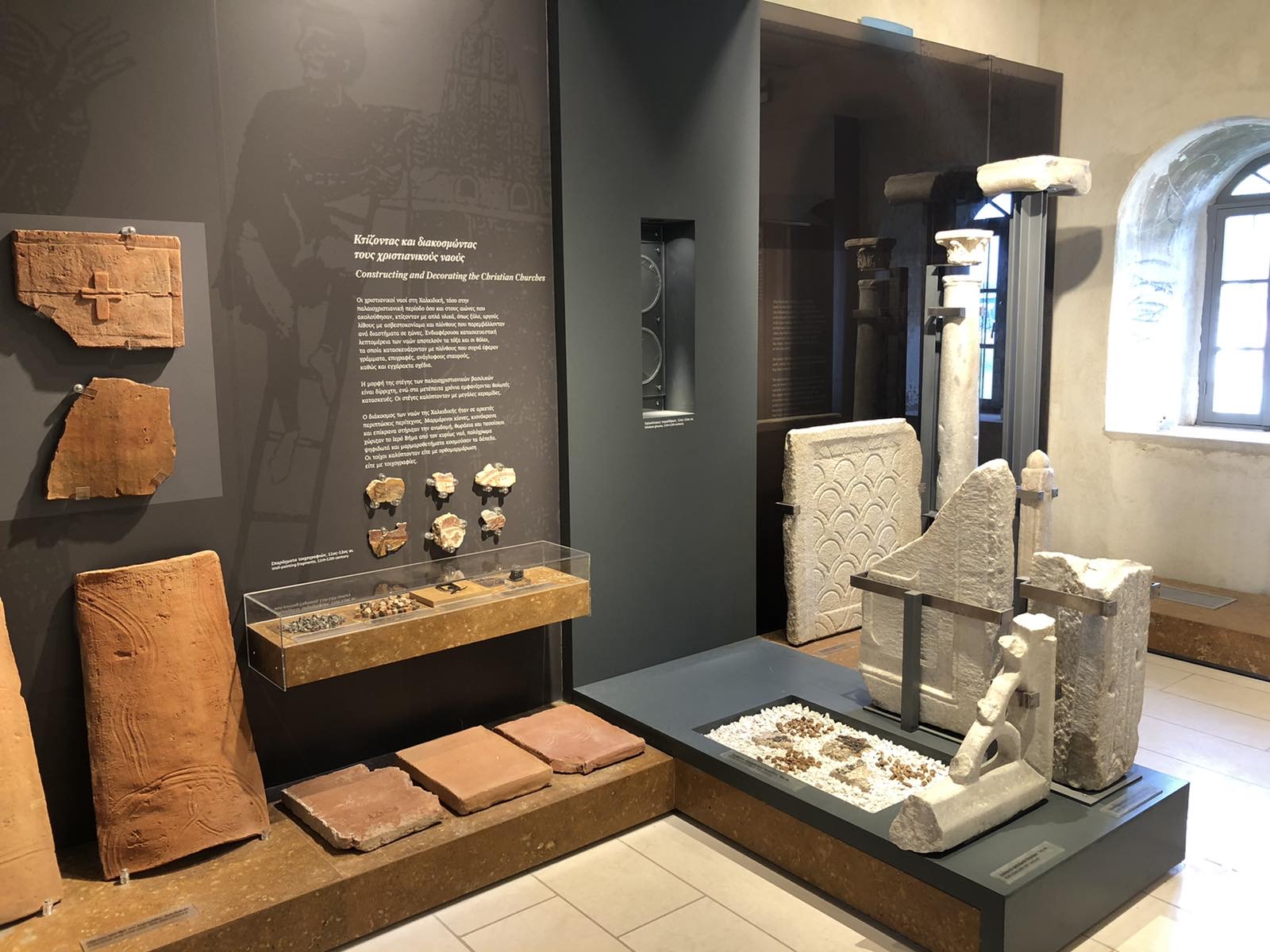
The Vault of Antiquities: The permanent exhibits inside display a rich array of Early Christian, Byzantine, and post-Byzantine treasures excavated across the peninsula over the last several decades.
-
The Artifacts: Visitors can view remarkably intact religious frescoes, intricate marble church sculptures, ancient coin hoards, and detailed Byzantine mosaics salvaged from regional ruins.
-
The Open Conservation Labs: A separate, ground-floor structure built in 1909 houses an innovative Open Center for the Conservation of Antiquities. Here, travelers can watch through glass-walled workshops as specialists meticulously restore ancient ceramics, decaying religious icons, and historic manuscripts right before their eyes.
Gastronomy: Sea View Ouzeris and Catch-of-the-Day Dining
Nea Flogita boasts a spectacular waterfront dining scene where travelers can taste fresh local flavors while watching the waves break.
-
Promenade Ouzeris: Traditional fish tavernas line the elevated side of the promenade. Order sizzling plates of fresh octopus, local steamed mussels, and crispy fried squid, all heavily dressed in extra virgin olive oil and lemon.
-
Nighttime Energy: As darkness falls, the town’s energy shifts seamlessly from relaxed beach lounging to a vibrant nightlife scene. The beach bars transform into open-air clubs, hosting resident DJs and live musical events right on the sand.
Travel Tip for Explorers
Balancing Beach and Byzantine Art
Dedicate your morning to history before the midday heat peaks. Head inland to the Metochi Flogiton. Admission to the park and the museum is free. Take a quiet stroll through the 27 acres of landscaped gardens, tour the permanent early Christian galleries, and observe the live restoration workshops. (Note: The museum complex is traditionally open from 08:30 to 15:30 and closed on Tuesdays).
Head back down to the palm-lined promenade for a refreshing dip in the shallow turquoise gulf waters.
Snag a table at a waterfront ouzeri for grilled octopus and fresh local mussels, completing a flawless day of high-end cultural and seaside tourism.