
Where Lush Valleys Meet Byzantine Heritage
Drive into the rolling southern foothills of Mount Kakavos to find Gomati. This historic settlement completely avoids standard tourist crowds. Instead, the village sits nestled in a fertile valley rich with olive groves, citrus orchards, and wild mountain herbs.
The village layout reflects its resilient upland setting. Sturdy stone-built houses terrace along the valley slopes. Furthermore, narrow streets wind around historic neighborhood squares. This setup preserves a peaceful agricultural atmosphere far away from the coastal rush.
A Legacy of Mining and Historic Triumphs
Gomati has anchored Macedonian history for centuries. In fact, old document archives trace its roots directly to the Byzantine era.
-
The Ancient Location: The village originally occupied a nearby hilltop site called Chortsa. However, devastating earthquakes and pirate raids eventually forced the locals to rebuild down in the safety of the valley.
-
The Mandemochoria Federation: An imperial decree integrated Gomati into the Mandemochoria during the Ottoman era. This powerful, self-governing federation of 12 mining villages successfully protected regional wealth and secured major local privileges.
-
Revolutionary Sacrifice: The village paid a heavy price during the Greek War of Independence. Specifically, Ottoman forces burned the town down in 1821 to punish the local freedom fighters.
Historic Masonry and Living Traditions
Today, the community fiercely preserves its old rural charm. For this reason, it serves as a haven for travelers seeking true cultural immersion and authentic hospitality.
-
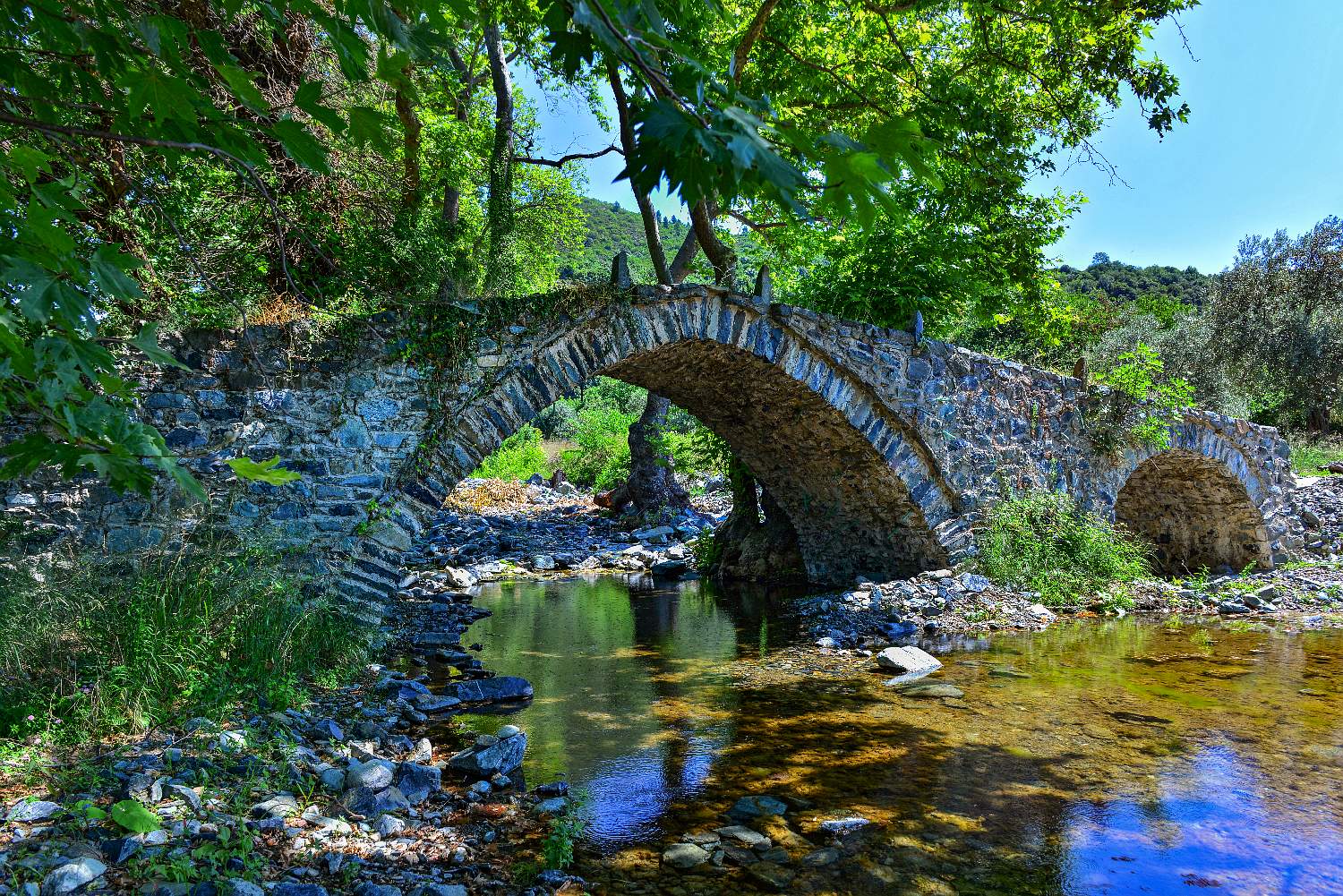
The Byzantine Stone Bridge: Walk just outside the village center to find the impressive old stone bridge. This structure showcases the remarkable engineering skills of early Macedonian master builders.
-
The Old Watermills: Scattered along the local riverbanks, historic stone watermills still stand. These ruins offer a fascinating window into the old agricultural economy of the region.
-
Local Gastronomy: The village tavernas specialize in slow-cooked local meats, wild greens (chorta), and rich, savory pies. Local farmers dress these dishes using their own low-acidity extra virgin olive oil.
Dual Escapes: Mountains and the Sea
While the town center offers a relaxing cultural retreat, its strategic location rewards outdoor lovers.
-
Develiki Beach: Located just a short 6-kilometer drive away, this wide sand spit serves as the village’s coastal harbor. The shore stays remarkably quiet and clean all summer. Excellent beachfront fish tavernas serve incredible seafood right on the sand.
-
Mali Kastra Fortifications: Hikers can climb the nearby Mali Kastra hill. The peak holds the ruins of ancient stone walls, providing stunning panoramic views across the Siggitikos Gulf.
Travel Tip for Explorers
How to Find the Byzantine Bridge
Finding the hidden Byzantine bridge requires a short detour from the village center. Take the main road heading north out of the village toward the foothills of Mount Kakavos. Look for the small dirt track branching off to the right near the riverbed.
Follow this track for about 1.5 kilometers. Park your car near the clearing when the path narrows. From there, a brief 5-minute walk through the plane trees brings you directly to the ancient stone arch. Wear solid walking shoes, as the river stones can be loose and uneven. Combine this walk with an afternoon swim at Develiki beach to enjoy the perfect balance of history and relaxation.
Seasonal Events
Panagia Feast (August 15th): The village hosts its largest traditional festival in mid-August. Locals gather in the central squares for live folk music, circle dancing, and large communal open-air feasts.
Harvest Season (October – November): Autumn brings the lively olive harvest. Visitors can watch local mills press fresh, aromatic oil and experience authentic rural life firsthand.