
Where Ancient Slopes Meet Untamed Forests
Drive high into the northern ridges of the peninsula to find Varvara. This historic settlement completely contrasts with the typical beach resorts down below. Instead, the village sits wrapped in an immense, 90,000-acre native forest. This protected Natura 2000 haven boasts ancient oaks, beeches, hornbeams, and wild hazelnut trees.
The village layout reflects its rugged upland setting. Lively neighborhoods feature sturdy stone houses. Furthermore, narrow cobblestone alleys (kalnderimia) wind around abundant public fountains. This layout preserves a peaceful alpine atmosphere far away from the coastal rush.
A Century of Resistance and Living Traditions
Varvara has anchored Macedonian history since at least the 14th century. In fact, early Ottoman tax records first documented the community during that era.
-
The Mandemochoria Federation: An imperial decree officially integrated Varvara into the Mandemochoria in 1762. This powerful, self-governing federation of 12 mining villages enjoyed significant privileges under Ottoman rule.
-
Revolutionary Sacrifice: The village paid a heavy price for freedom during the Greek War of Independence. Specifically, Ottoman forces systematically burned the town down in 1821. Later, the area served as a major base during the Macedonian Struggle under local chieftain Athanasios Minopoulos.
-
The Living Heart: Rebuilt with resilience, the village center features the beautiful Church of Agia Varvara, erected in 1875. The town’s name pays homage to this patron saint. However, local folklore also whispers tales of an ancient queen who once ruled these mountains.
Authentic Gastronomy and Living Traditions
Varvara remains fiercely proud of its rural lifestyle. Therefore, it provides a paradise for travelers seeking true cultural immersion and authentic hospitality.
-
Renowned Meat Gastronomy: The village has earned a massive reputation across northern Greece for its food. Local tavernas specialize in wild boar stew, rich bean soups, and premium meats. The kitchen staff sources these meats daily from free-roaming mountain herds.
-
The Women’s Cooperative: The local women of Varvara run a famous cooperative. They handcraft traditional products using generational recipes. Consequently, you can buy wonderful fruit preserves (spoon sweat) and rich, hearty trachanas (fermented grain pasta).
The Gateway to the Aristotle Wilderness
While the town center offers a relaxing cultural retreat, its immediate surroundings reward active exploration.
-
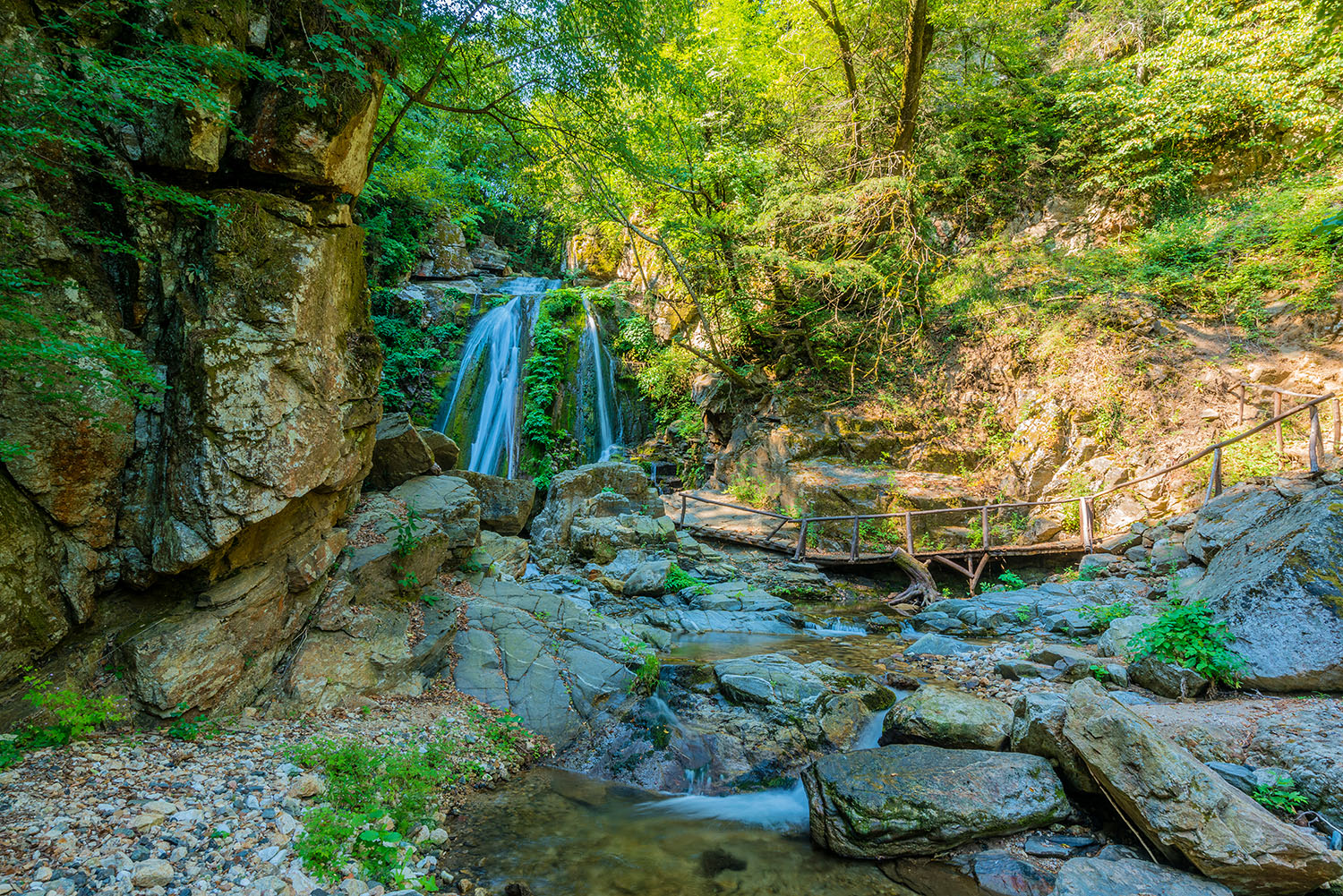
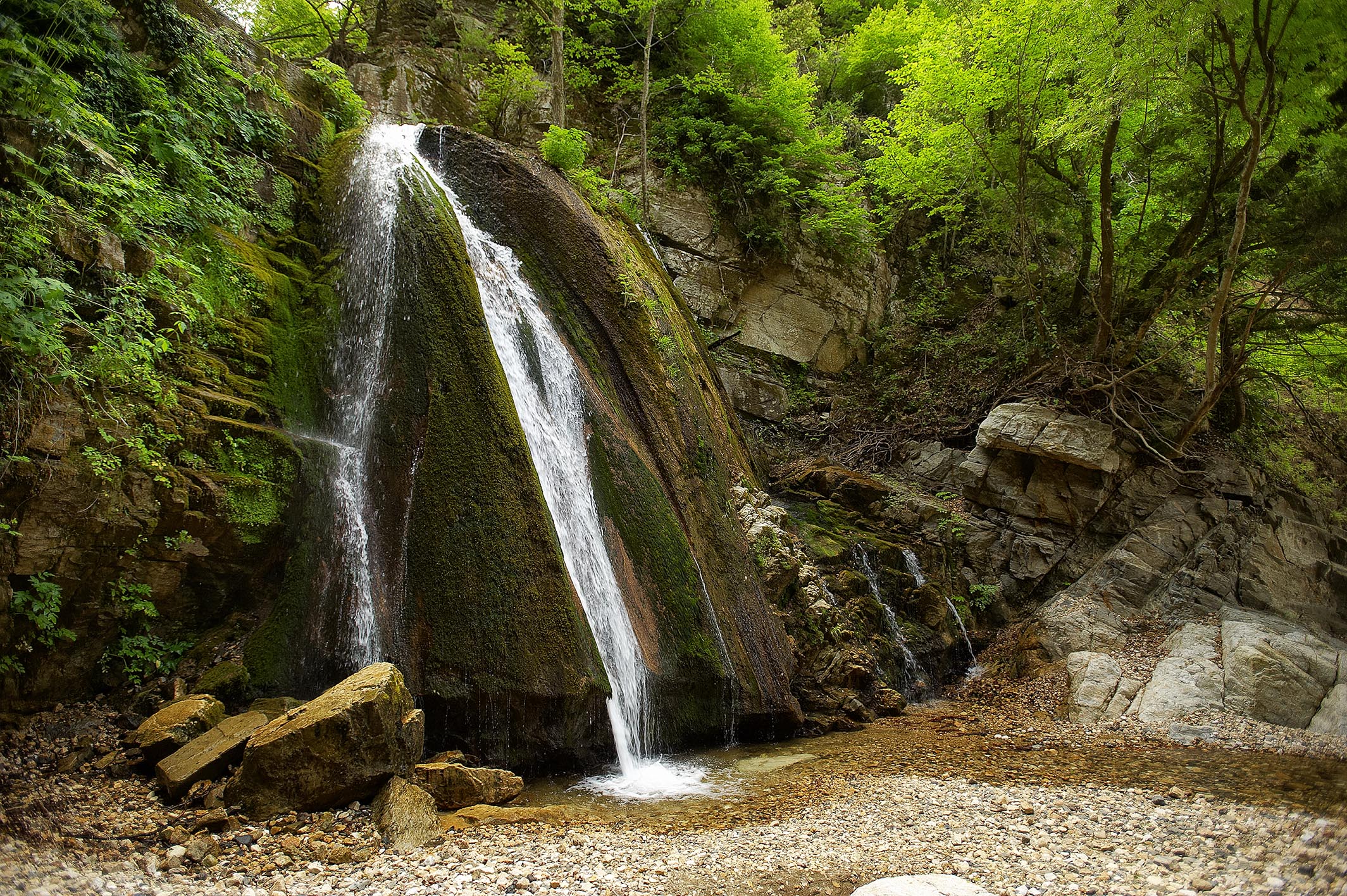
The Varvara Waterfalls (Tou Angelousi): Hidden within the dense forest toward Olympiada, these two spectacular waterfalls drop 25 and 40 meters down vivid, multi-colored rock faces. The Mavrolakas River feeds these drops. This river forms the natural boundary between Varvara and Olympiada. Handcrafted wooden bridges and clear signage make the brief 10-minute walk perfectly accessible for families.
-
Forest Drives: The winding asphalt road connecting Varvara to Olympiada cuts straight through the deep woods. For this reason, travelers widely consider it one of the most beautiful scenic drives in Halkidiki. Along the way, you will pass the famous 5 Vryses (also known as Krasoneri) natural springs.
Seasonal Events
Winter Feast (December 4th): The village celebrates its patron saint, Agia Varvara. Locals transform the square into a lively gathering amidst a striking, snow-dusted winter landscape.
Easter Celebration (Agios Georgios): Held on the second day of Easter, this massive, 3-day traditional festival features local dances. Chefs also prepare the famous traditional stuffed goat (tsigerosarmas).
Summer Festival (Late July): This vibrant 3-day cultural event fills the crisp mountain air with live concerts. Additionally, open-air food markets showcase local forest honey and preserves.
Travel Tip for Explorers
Navigating to the Waterfalls
Finding the cascades requires following a specific route through the forest. Drive along the asphalt road that connects the villages of Varvara and Olympiada. Keep an eye out for the wooden informational signs marking the turnoff. At the sign, turn onto the dirt road.
Follow this dirt road for approximately 2.3 kilometers until you reach the designated parking clearing. From the clearing, the trail splits into two paths:
The Left Path: Leads you to the base of the first waterfall via a quick, easy walk.
The Right Path: Guides you higher up to the second, taller cascade.
Both paths feature sturdy wooden bridges and clear markers, making the short 5-to-10-minute walk safe and manageable for all fitness levels.