
Historic Stone Fortresses Guarding a Quiet Fishing Bay
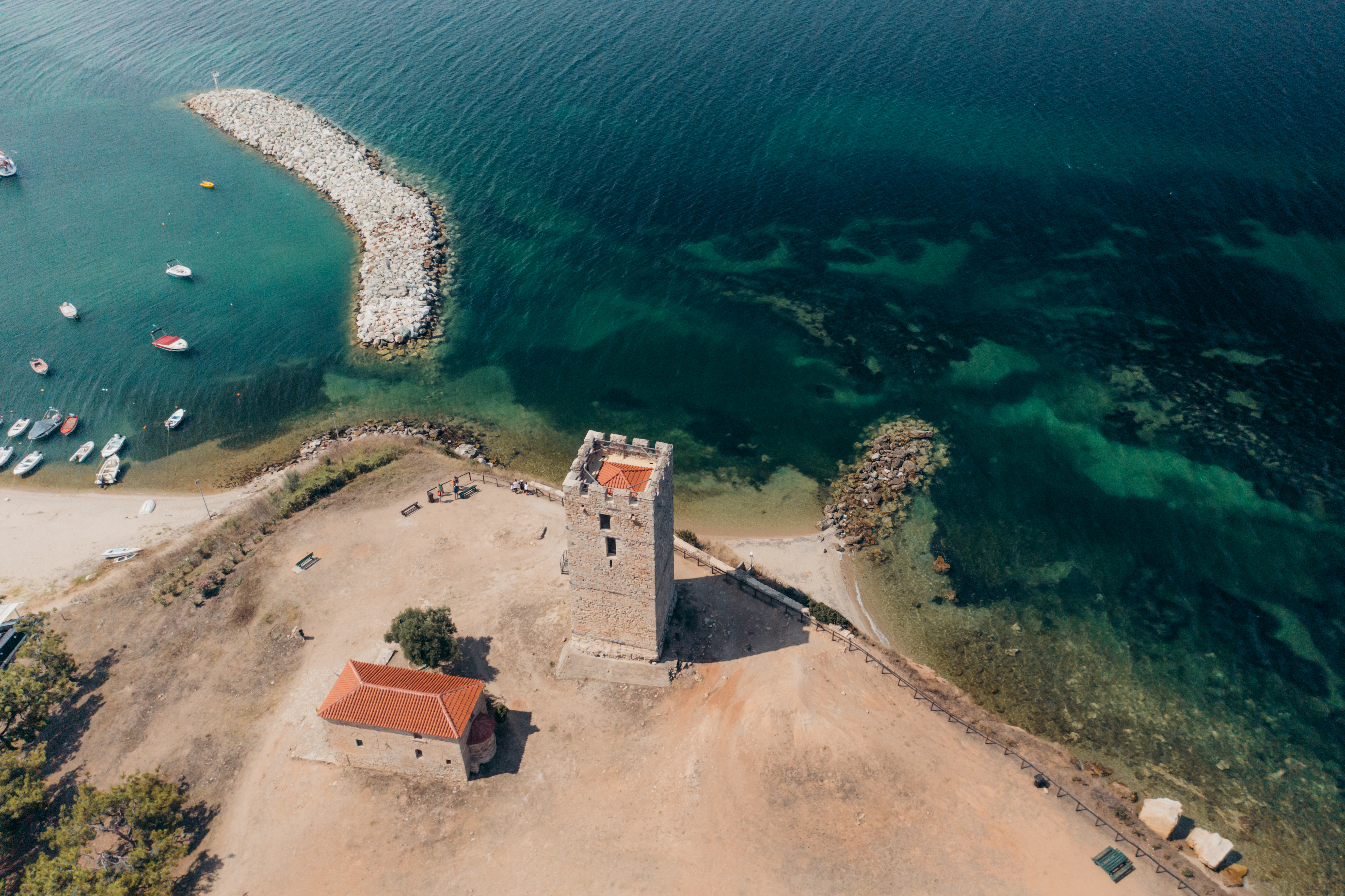
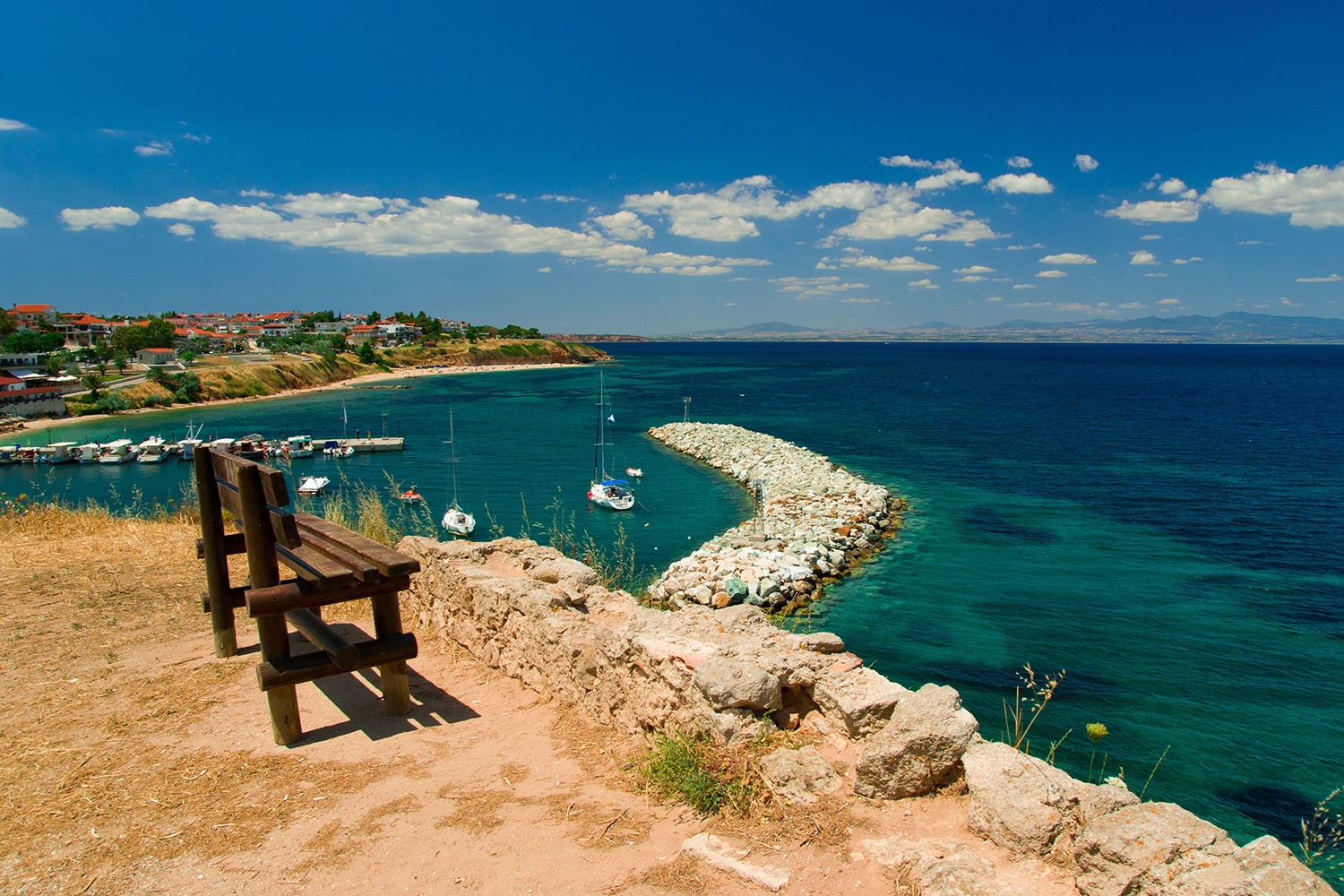
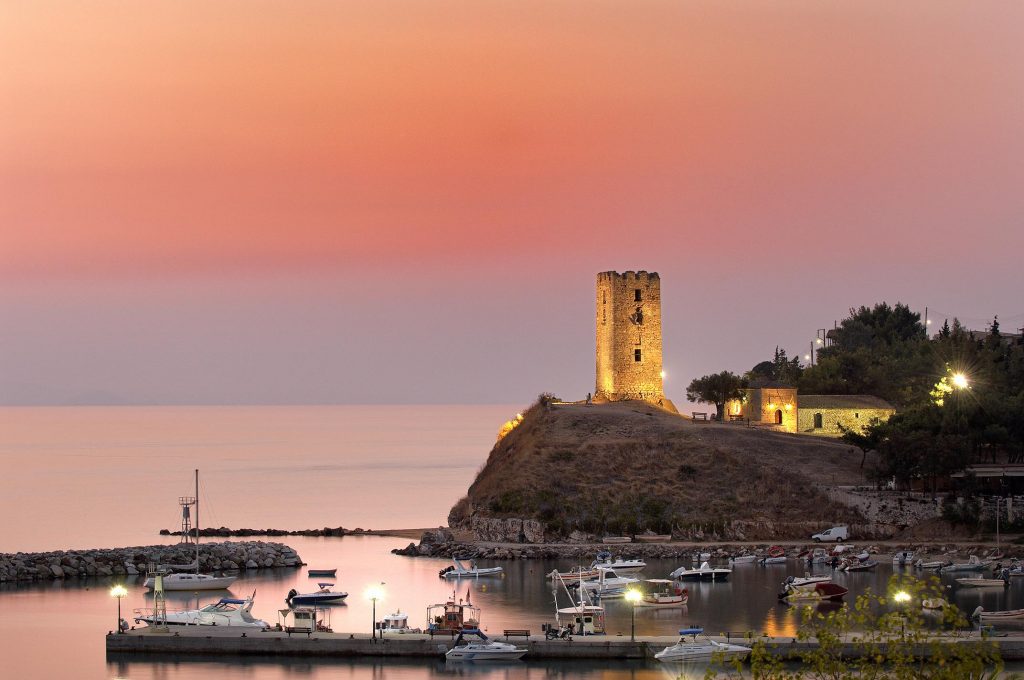
Pass through the entry gate of the peninsula and head down the eastern coast to reach Nea Fokea (also spelled Nea Phokea). A massive Byzantine stone tower instantly commands the skyline, standing watch from a grassy cliff above the harbor. The town blends deep religious history and medieval fortifications with a highly relaxed, traditional seaside pace.
The village setup makes exploration incredibly easy. The modern square sits just inland, packed with traditional cafes and bakeries. Steps away, the coastal road leads directly to the fishing harbor and the historic monuments framing the bay.
Protected Sandy Shallows and Waterfront Dining
Nea Fokea offers a peaceful, compact coast that appeals perfectly to relaxed strollers and families.
-
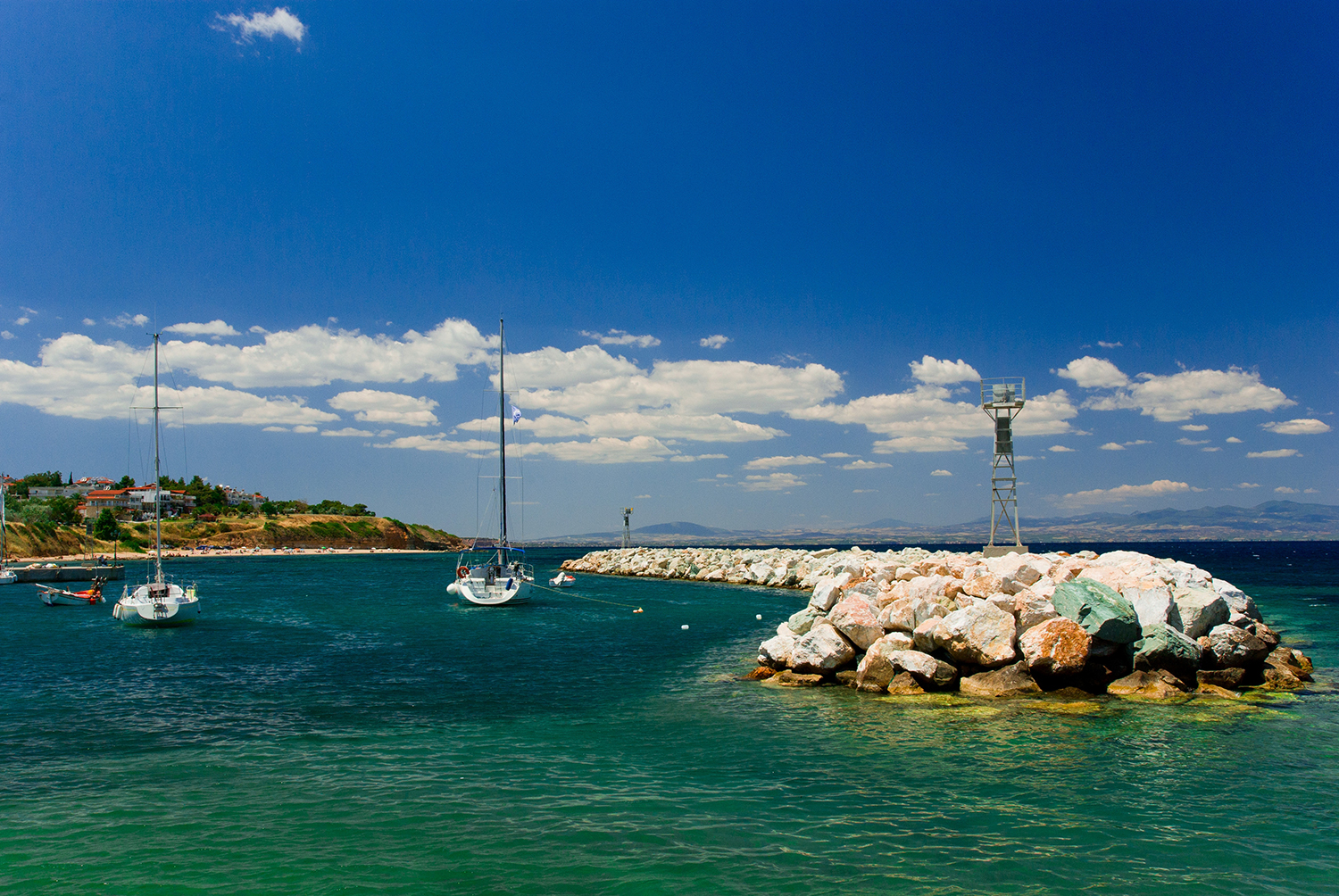
The Village Beach: A tidy, sandy strip curves right next to the harbor area. Pine trees line the back edge, providing natural shade over the calm, shallow turquoise waters.
-
The Harbor Pier: The stone breakwater shelters a vibrant fleet of traditional wooden fishing boats (kaikia). Walk the pier to see the daily catch arriving straight from the sea.
-
Authentic Seafood Tavernas: Classic fish tavernas sit directly on the waterfront below the tower cliff. Diners enjoy fresh grilled sardines, local calamari, and regional wines right next to the lapping waves.
Medieval Towers and the Secret Cave of Saint Paul
The destination houses two of the most significant historical and religious landmarks on the entire peninsula:
-
The Byzantine Tower: Built in 1407 from ancient stones, this well-preserved 15-meter fortress tower originally protected the farming estate of the Mount Athos St. Panteleimon Monastery. It later served as the military headquarters during the 1821 Greek War of Independence.
-
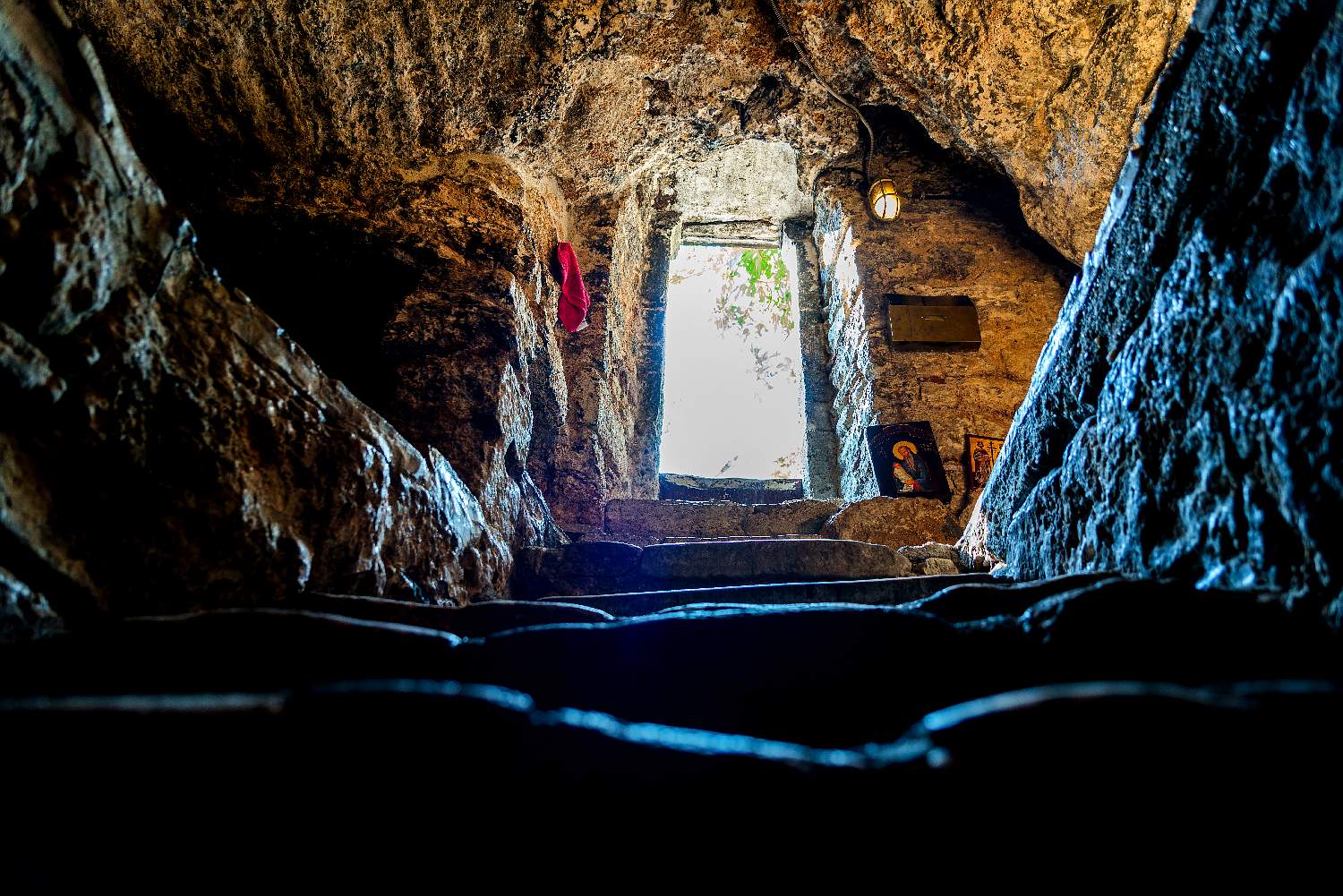
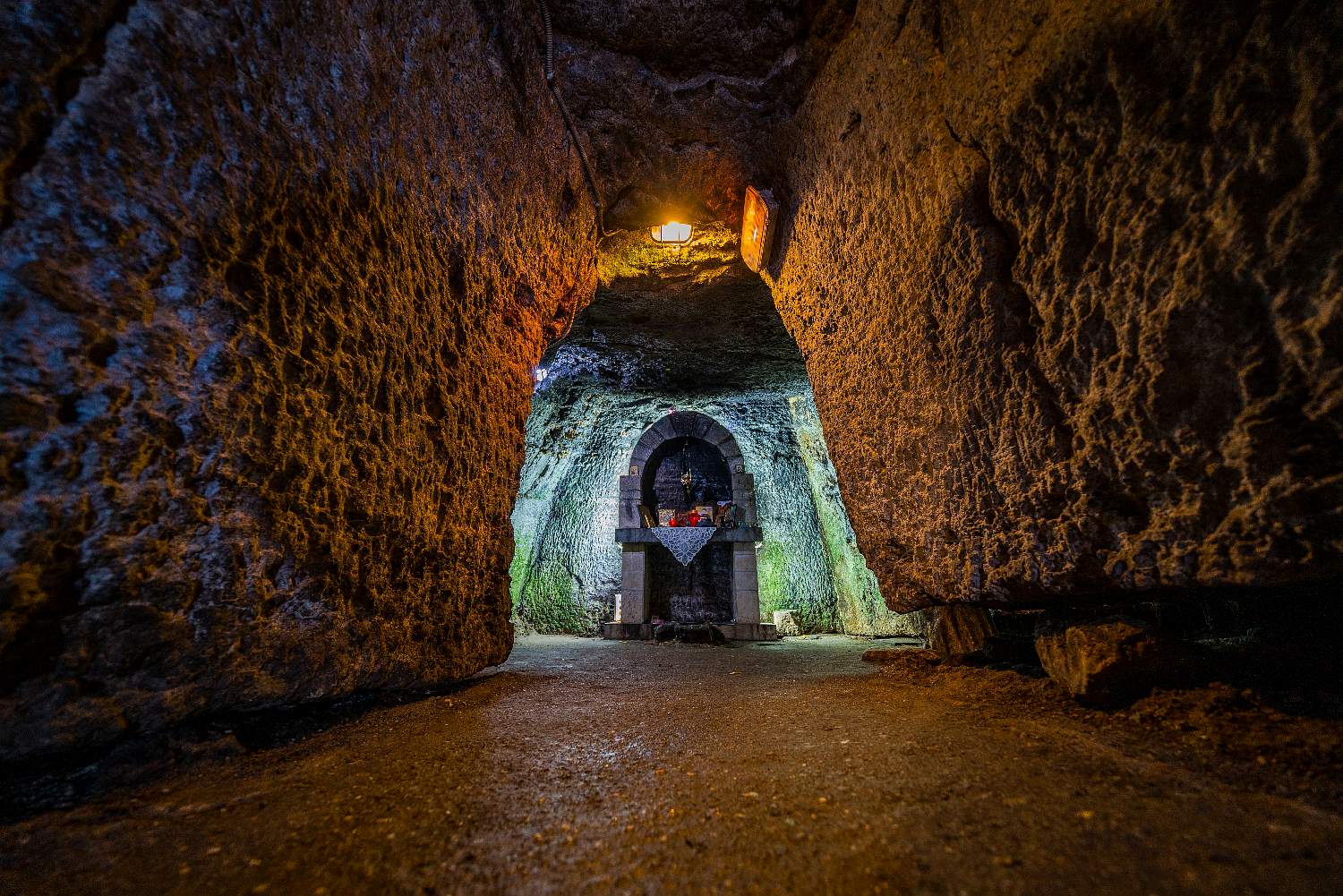
St. Paul’s Holy Water Cave: Cross the main road opposite the harbor to find this unique sacred site. Visitors step through a low doorway into a 20-meter, hand-carved rock tunnel. The passage leads into an underground chamber containing an ancient holy water spring (Agiasma) and historic frescoes where Saint Paul hid from persecutors.
Travel Tip for Explorers
Travel Tip for Explorers: The low tunnel leading inside Saint Paul’s cave is narrow and requires you to bend down as you walk through. Bring a light jacket, as the underground air drops in temperature significantly. Explore the rock cave at 10:00 before any tour buses arrive, climb the hill to view the Byzantine tower up close, and secure a front-row harbor table for a late lunch by 14:30.