
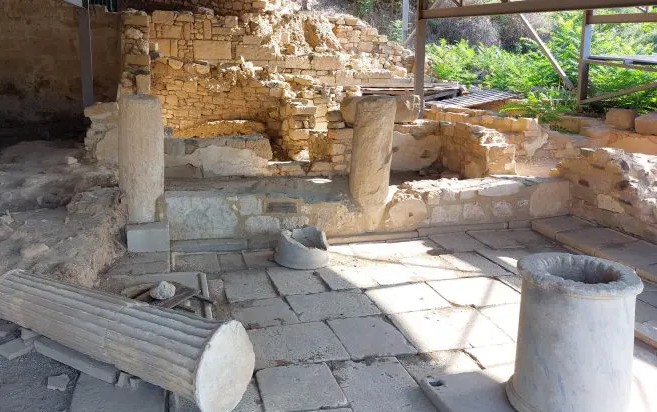
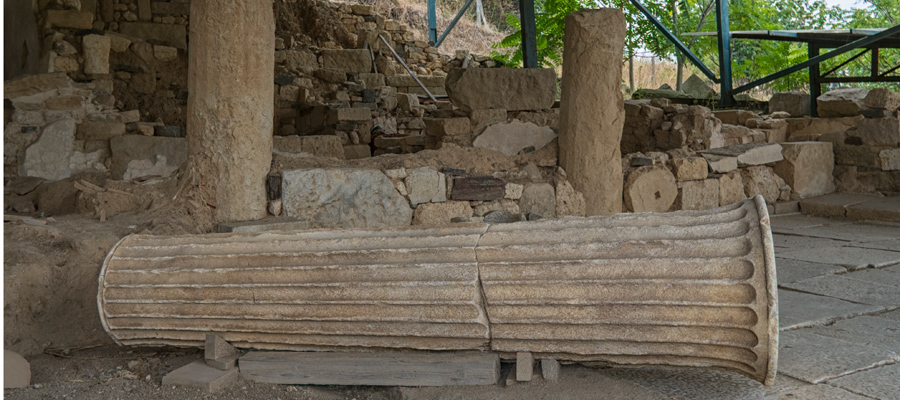
Dominating a strategic coastal ridge right on the border of East Halkidiki, the ruins of Ancient Akanthos look out over the modern town of Ierissos and the Aegean Sea. Established in the mid-7th century BC by seafaring colonists from Andros, this heavily fortified maritime power grew to become the largest and most influential ancient port city in the region. Today, the expansive archaeological site preserves a dramatic landscape of monumental city walls, classical foundations, and a massive beachfront cemetery that holds the keys to understanding centuries of early Hellenic trade and warfare.
1. A Strategic Prize of the Classical World
The growth of Ancient Akanthos was fueled by its ideal geographical position and rich natural resources. Built across three interconnected hills, the city controlled the main overland pass leading toward the Mount Athos peninsula, while its deep-water harbor allowed local merchant fleets to dominate trade routes between Macedonia and the wider Aegean.
The city’s immense wealth often placed it directly in the crosshairs of major empires. During the Greco-Persian Wars, King Xerxes forcefully drafted the city into his military plans, using its naval harbor as a supply base. Later, Akanthos bounced between alliances with Athens and Sparta during the Peloponnesian War, always fighting to maintain its fierce independence. This autonomy was clearly reflected in its famous silver coinage. Local mint-masters stamped their coins with a bold emblem—a lion attacking a bull—signaling the city’s economic strength across the ancient Mediterranean.
2. Uncovering the City Walls and Foundations
Systematic archaeological excavations have slowly brought the urban plan of Akanthos back to light. The site features a clear look at how classical military defense systems evolved over centuries of shifting conflict.
The main archaeological sectors include:
-
The Acropolis Circuit Wall: The highest crest of the hill preserves massive, masterfully fitted stone blocks that formed the primary citadel. In some sections, these defensive layers reveal historical rebuilds that extended well into the Byzantine period.
-
The Classical Residential Quarters: Terraced down the south-facing slopes, the foundations of large public buildings and private homes are laid out in a grid pattern. Excavators discovered these rooms were originally adorned with high-quality clay pottery, fine storage amphorae, and imported decorative goods.
-
The Byzantine Basilica: Built directly over the ruins of a classical temple, the foundations of a later Christian church stand near the shore, proving that the city retained its religious and administrative importance through the medieval era.
3. The Shoreline Necropolis and the Architectural Protection Shell
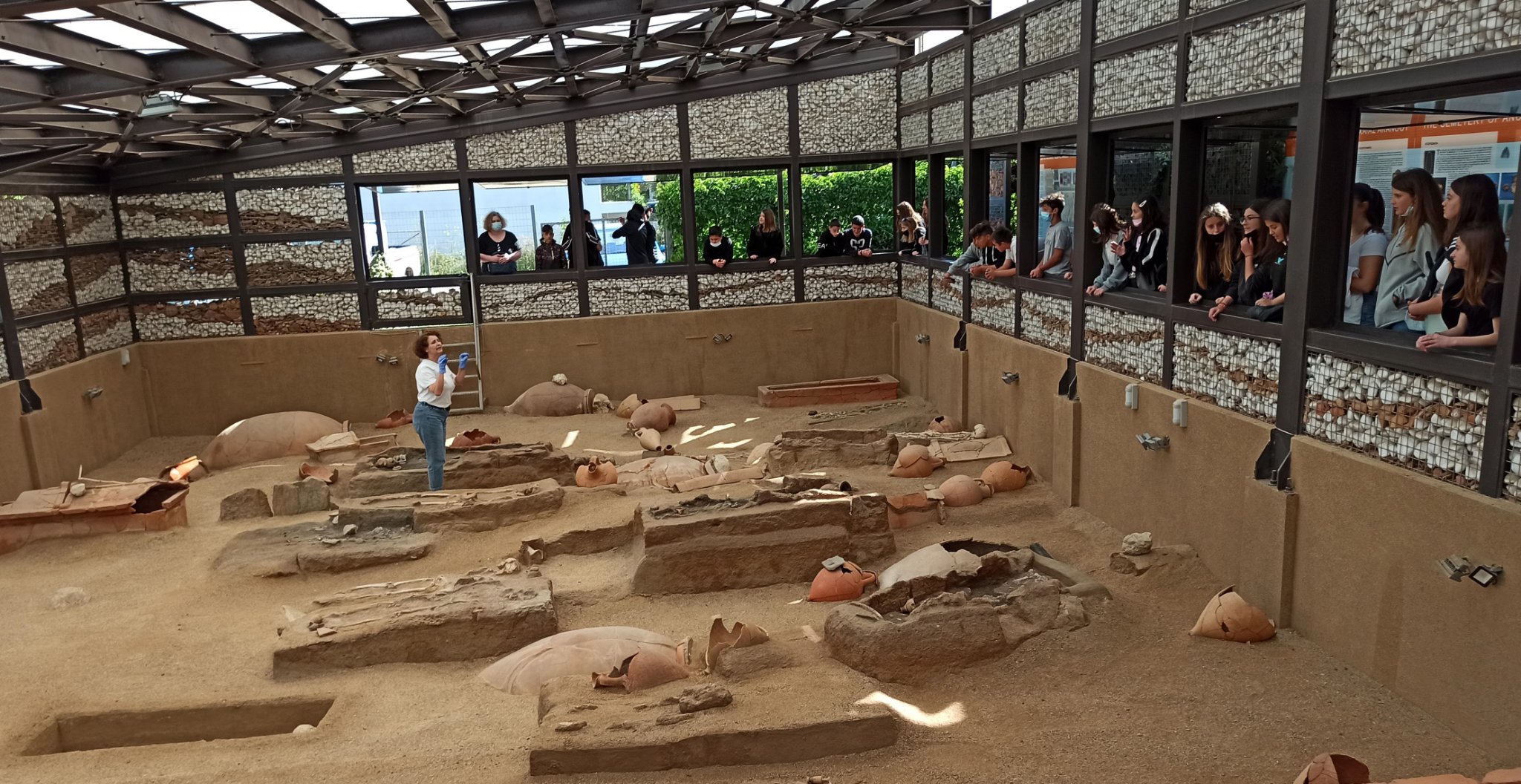
The most astonishing feature of Ancient Akanthos is its vast cemetery. Extending directly across the coastal zone of modern Ierissos, this burial ground contains an uninterrupted line of over 13,220 graves spanning from the Archaic period to modern times.
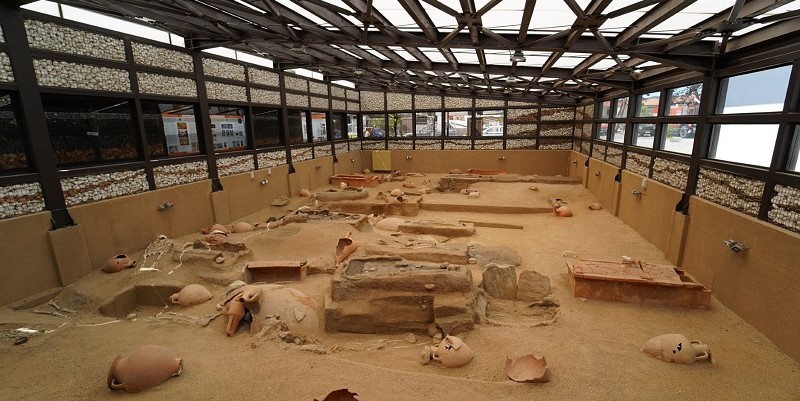
To safeguard this priceless archaeological archive, the Ministry of Culture constructed a specialized architectural shell designed for the in situ protection and display of the antiquities. This structure showcases a small yet highly representative sample of 84 specific tombs, dating from the end of the 6th century to the end of the 4th century BCE.
Inside this protective pavilion, visitors can view the explicit variety of ancient interment customs exactly where they were uncovered:
-
Diverse Burial Styles: The site preserves common entombments that took place in simple or tile-covered pits, along with detailed clay sarcophagi and specialized burial vessels of various types and sizes.
-
Cremation Pits: The display also features the final resting places of cremated individuals, whose remains were carefully placed within simple and brick-lined pits.
-
Economic Indicators: The sheer wealth and diversity of the burial offerings found within these 84 graves offer undeniable evidence regarding the high socio-economic status and the extensive international commercial connections of ancient Akanthos.
Travel Tip for Explorers: Begin your tour on the high ridge to walk among the monumental city walls and take in the panoramic views of Ierissos Bay. Afterward, head into the town of Ierissos to visit the custom architectural protection shell located over the cemetery excavation area. Walking through this pavilion allows you to view the 84 original tombs up close and compare the different classical burial styles in complete comfort. To see the finest coins and pottery excavated from these very graves, make sure to visit the Archaeological Museum of Polygyros.
Visiting information
Opening days & hours
Daily [CLOSED TUESDAY]
08:30-15:30
FREE ENTRANCE