
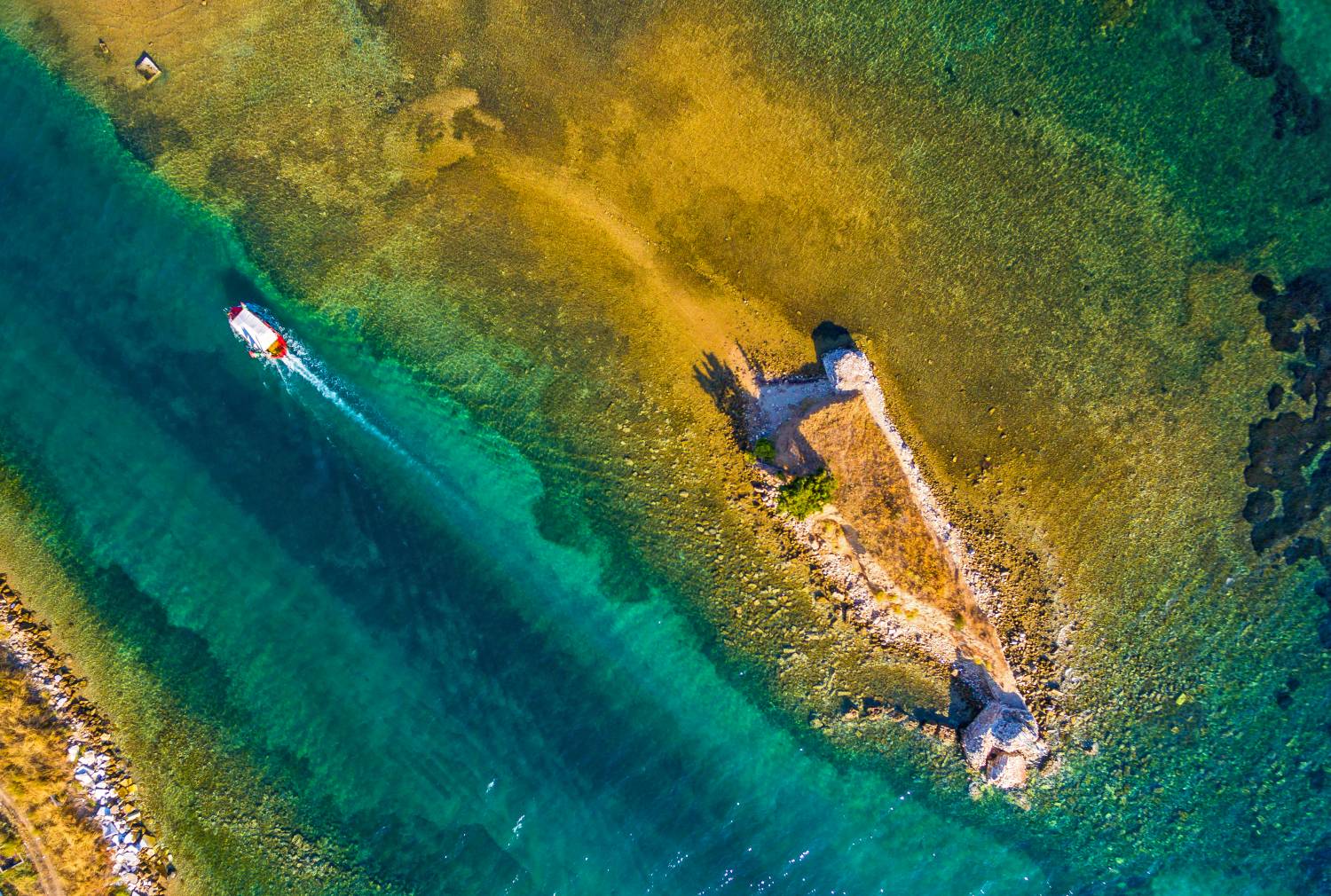
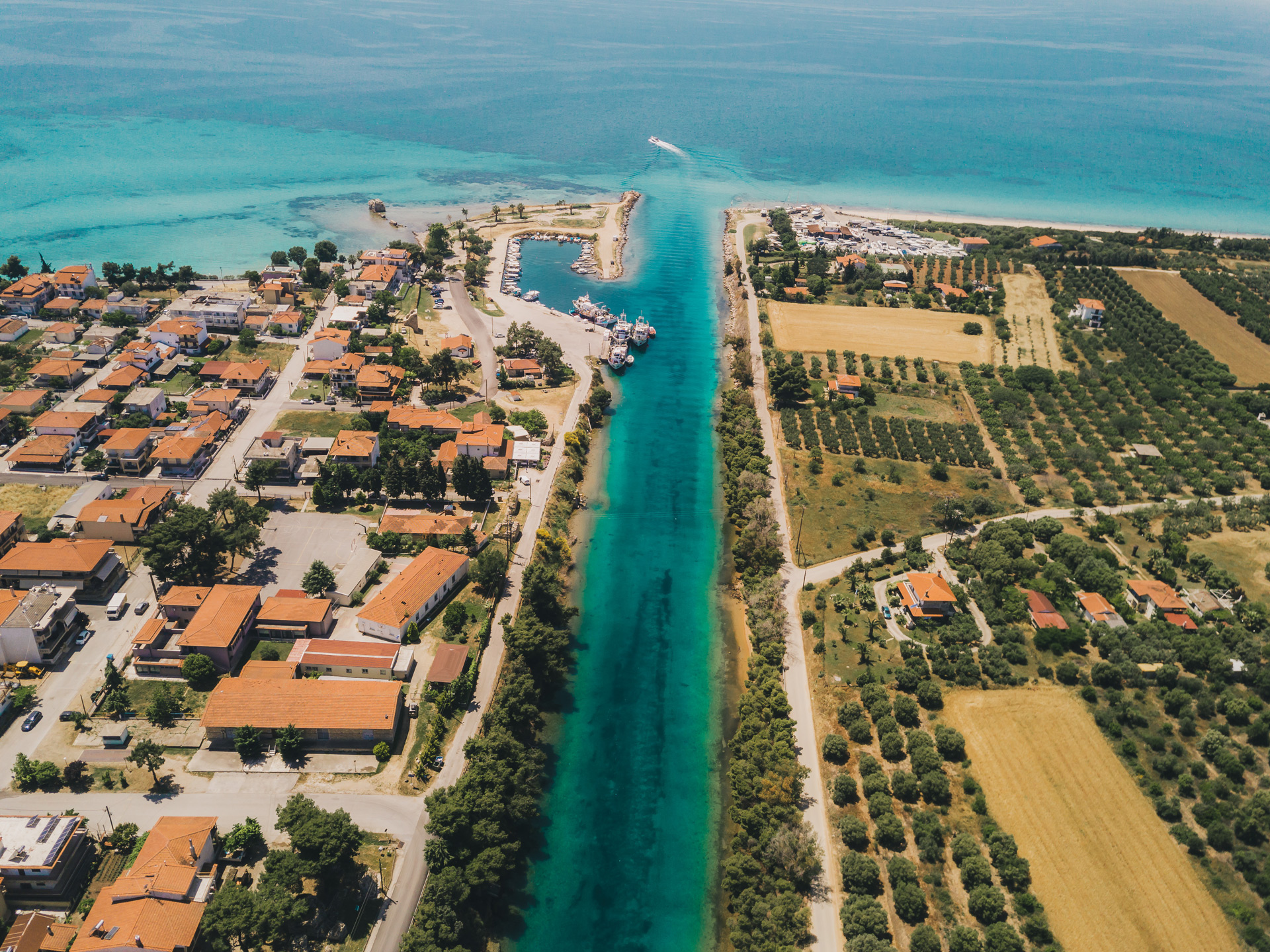
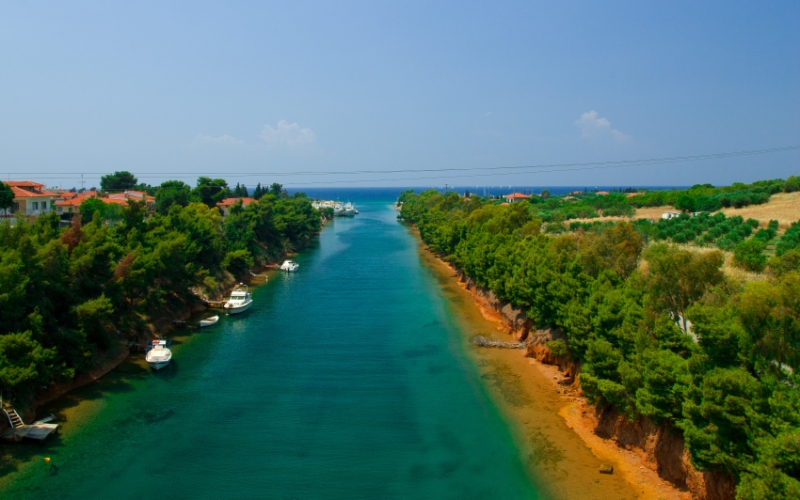
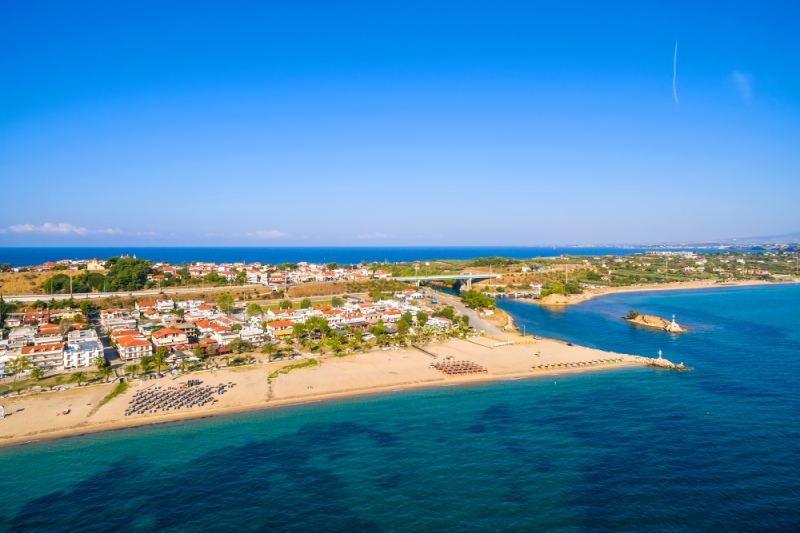
A colossal engineering feat slicing right through the narrowest neck of the Kassandra peninsula: the Canal of Nea Potidea instantly transforms the geography of Halkidiki. This massive, 1,250-meter waterway connects the Thermaic Gulf directly to the Toroneos Gulf. Straddling this water channel sit the imposing, weather-beaten ruins of the Justinian Wall. Consequently, this strategic maritime pass serves as both a literal bridge to Kassandra and a powerful open-air monument to ancient defensive warfare.
1. Slicing the Peninsula: A Chronology of the Cut
For thousands of years, rulers recognized that cutting through this exact 1-kilometer strip of land would alter trade and warfare in Northern Greece. While historical records remain cloudy on who first broke the ground, the timeline highlights a relentless pursuit to sever the peninsula.
Strabo first noted the existence of a canal here in the 1st century BC, attributing early works to King Cassander. Later, in the 14th century, the Byzantines cleared the channel to protect their naval assets. However, the canal eventually filled back in with silt and debris over centuries of neglect. Instead of fading away, the grand design returned. Engineers initiated a massive excavation project in 1930. They successfully opened the deep, functional waterway we see today, completely changing local shipping routes.
2. The Justinian Wall: The Imperial Shield
Running directly parallel to the north bank of the modern canal sit the remains of the Justinian Wall. Emperor Justinian heavily fortified this narrow choke point during the 6th century AD. The massive defensive line originally stretched from coast to coast, blocking the land entrance to the entire Kassandra peninsula.
The fortifications feature distinct architectural engineering:
-
The Stone Bastions: Rectangular towers project outward from the main wall at regular intervals. Builders utilized large, pre-cut blocks from ancient Potidea to construct these strongholds.
-
The Submerged Foundations: Look closely at the Western edge where the wall meets the Thermaic Gulf. Portions of the foundations now sit underwater, proving that sea levels have shifted significantly since antiquity.
Ultimately, this stone barrier repelled countless barbarian incursions. It protected the thriving agricultural communities tucked safely further down the peninsula.
3. Modern Life Along the Waterway
Today, the Canal of Nea Potidea serves a dual purpose as an active maritime corridor and a scenic public space. A soaring modern highway bridge spans high above the water, acting as the main gateway for travelers driving south into Kassandra.
Down at water level, the atmosphere shifts completely. Small, colorful wooden fishing boats constantly navigate the current, creating a dynamic visual display. Furthermore, the local municipality recently paved smooth pedestrian pathways along the southern banks. Visitors can enjoy an easy, level stroll right next to the flowing seawater while watching the sunset melt over the Thermaic Gulf.
Travel Tip for Explorers: Park your car near the southern foot of the main bridge to explore the area on foot. Walk along the edge of the canal toward the western pier to stand right next to the largest surviving section of the Justinian Wall. For a perfect evening, grab a waterfront table at one of the traditional fish taverns on the east side. You can watch the local fishermen guide their boats back into the canal as the lights of the bridge reflect off the water.
Visiting information
Open 24 hours