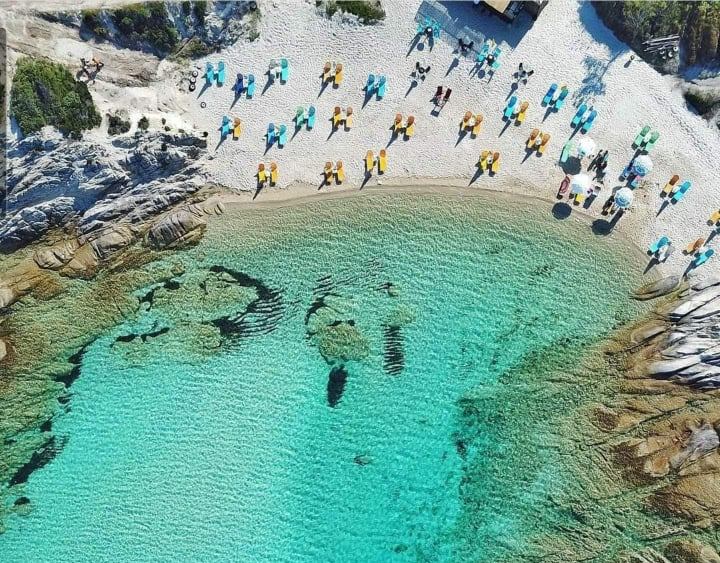
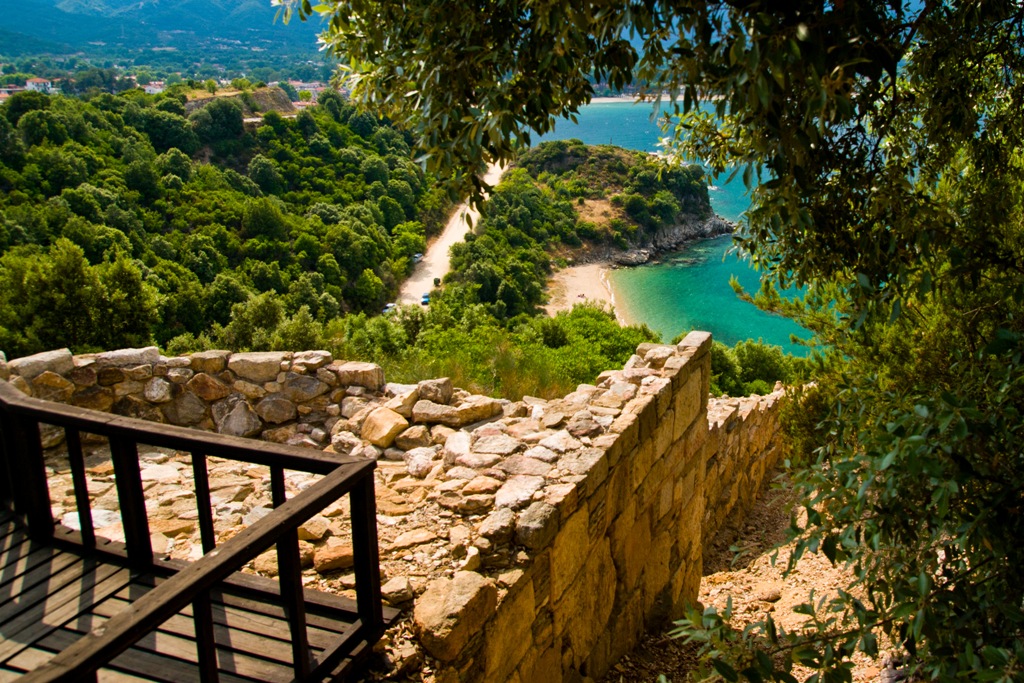
While Halkidiki is globally renowned for its legendary multi-toned blue coastlines, it also holds a profound, foundational place in the history of Western thought. Located on the picturesque Liotopi peninsula right next to the modern coastal village of Olympiada, Ancient Stagira is one of the most significant historical landmarks in Northern Greece.
As the definitive birthplace of Aristotle—the greatest philosopher of antiquity and tutor to Alexander the Great—this archaeological gem seamlessly merges immense historical weight with a jaw-dropping natural landscape. Walking through its ruined fortifications offers an immersive look into an ancient city-state perched dramatically over the Strymonic Gulf.
Travel to Halkidiki, and go back in time. Visit the Sanctuary of Zeus Ammon in Kallithea, a location dedicated to the cult of Dionysus, the god of wine and theatre, Zeus Ammon, and Asclepius. Get to know Ancient Olynthos, inhabited since the Neolithic era.
The Birthplace of Greatness: A Brief History
Ancient Stagira was established in the mid-7th century BC by settlers from the island of Andros, later joined by colonists from Chalcis. Due to its strategic maritime position and proximity to rich mineral deposits, the city quickly grew into an influential, independent economic power in ancient Macedonia.
The city’s history took a tragic turn during the Olynthian War in 348 BC when it was completely destroyed by King Philip II of Macedon. However, in a remarkable twist of fate, Philip later rebuilt the entire city, restored its citizens’ freedom, and repatriated its exiled inhabitants. Why? As a grand gesture of gratitude to Aristotle for agreeing to tutor his young son, Alexander the Great.
Top Archaeological Highlights to Explore
The archaeological site spans across two scenic hills right on the cape. A well-maintained path system allows visitors to explore the extensive ruins, which were systematically unearthed during excavations led by archaeologist Kostas Sismanidis in the 1990s.
1. The Mighty Fortification Walls
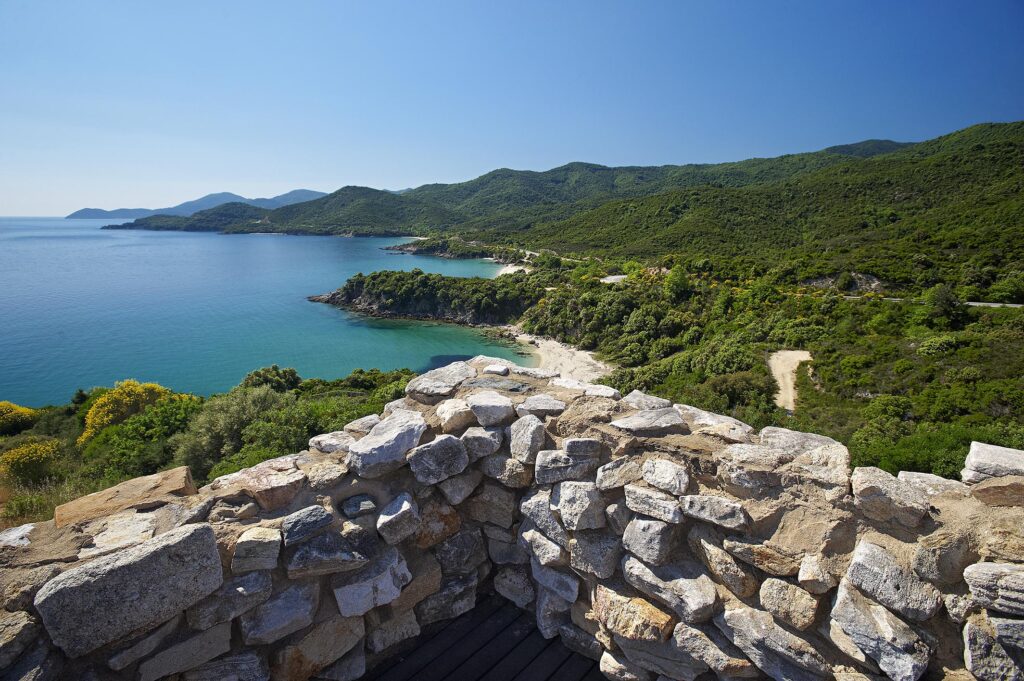
The massive fortification system is one of the first structures you encounter. It features an incredible mix of architectural styles, showing where early classical masonry was later reinforced by heavy Byzantine walls. The view from the top of the ramparts down to the sheer sea cliffs explains exactly why this site was chosen for military defense.
2. The Agora and the Stoa
The beating heart of public, political, and commercial life in Stagira was its Agora. Visitors can trace the foundations of a massive Stoa (a classic covered walkway), which dates back to the 4th century BC. This public square is where citizens gathered to debate politics, trade goods, and where a young Aristotle undoubtedly observed the early mechanics of societal organization.
3. The Tomb and Sanctuary of Aristotle
Following extensive archaeological work, compelling evidence points to a specific, monumental vaulted structure on the site as the Tomb of Aristotle. Historical literary sources indicate that after the philosopher died in Chalcis in 322 BC, the people of Stagira brought his ashes back to his birthplace with immense honors, placing them within a grand hero-shrine (Aristoteleion) to protect his memory.
Maximizing Your Cultural Visit
The Coastal Trail Stroll: The archaeological site is unique because it is completely open to the sea breeze. Wear sturdy walking shoes, as the paths climb across two hillsides covered in native Mediterranean brush and wild herbs.
The Perfect Day Trip Combination: After absorbing the philosophy and history at the ruins, take a short path down to the crystal-clear waters of Olympiada beach or Proti Ammoudia for a refreshing swim and a lunch of locally caught fresh mussels—a gastronomic trademark of East Halkidiki.